Pages

Showing posts with label Eco Tourism. Show all posts

May 8, 2014

Quick Thoughts On Slow Efforts

Watching the video below, a few thoughts and questions come to mind. 


What is the landscape of post-communist industry, more specifically chemical [or any for that matter] industry in Albania? 
Is it in use? Where? When? How? 
Who has control over it? 
What's its relationship with the 'Sustainability' Movement we're pushing for? 
What is the process from making to destruction dumping the unwanted? 
How do these dumping sites affect the city/life today? Its landscape? [here]
What about the future? How are they designed (if at all)? Can their present (state of being) sustain their future? 
What is their infrastructure? 
How does their artificiality co-exist with the natural bodies of water, land, air and civilization?
How can we start thinking about 'zones of exclusions', post-human error sites and their futures? 
What if this context was Gërdec? What is the future of tragic abandoned sites?

Of Monsters and Men.
Future city/life will grow from a ruined history.
Differently.
Humanity will be the Other.
Damaged as Species. 
Timid in Overexposure. 
Mis/scaled in Habitation. 
Quarantined in Contagiousness. 

So, in our attempts to design the [future] smart city, let's not focus [only] on technological advances but the possibility of [its] destruction and [re]mutation from a failed relationship between man and machine. 

A Mis/communication. 
A caprice. 
An accident. 
A coup.
Incompetent Bureaucracy.
Fear that leads to Consequential Possibilities. 
An awareness that covers [more] ground beyond self [interest].

#FutureEcologies
#PostApocalypseLife
#DesigningFutures


********************************************************

Dec 13, 2013

Otherness | Misc. Projects of the Week

Otherness this week: 

INVISIBLE WIRELESS NETWORKS
theoretically visualizing the invisible electromagnetic radiation from cellphone signals

photo by nickolay lamm
via
an installation of 13 glass piano sculptures suspended off an apartment building, 
inspired by the italian tenor enrico caruso

photos by Michael Short/The Chronicle
via
SMARTPHONES INTO 3D SCANNERS
instead of taking photographs, you can just move the phone around the object and a three dimensional model appears on the screen

via
a centuries-old salt mine in romania, converted into an underground tourist attraction complete with rides, a museum, and health spa


*******************************************************************

Aug 14, 2012

Featured Artist | CONCRETE MUSHROOMS

CONCRETE MUSHROOMS PROJECT

Reusing Albania's 750,000 Abandoned Bunkers.

The Concrete Mushrooms project started in October 2008 as a research by Elian Stefa and Gyler Mydyti, two Albanian graduate students at the Politecnico di Milano. It was the first formal effort to research and explain the bunkers at a national and international stage, aiming to raise awareness and revitalize these structures with a repurposing project for tourism
. 

Concrete Mushrooms Film

Concrete Mushrooms Preview - Albania's 750,000 inherited bunkers. from Concrete Mushrooms on Vimeo.

Concrete Mushrooms Book
Authors: Elian Stefa & Gyler Mydyti
Contributors: Niku Alex Mucaj, Alicja Dobrucka, Olia Miho, Vera Sacchetti, Bunkerfest.
ISBN: 978-84-615-9870-0
Size: 16,50 x 25 cms.
Date: August 2012
cc: This book is licensed under a Creative Commons Attribution-NonCommercial-NoDerivs 3.0 Unported License.
Publisher: dpr-barcelona  


via  dpr-barcelona

Concrete In Common Opening Event 
 / 
Concrete Mushrooms Book Launch 
AUGUST 15, 2012 
@ KUNSTRAUM RIEHEN - Basel CH  
@Tirana Ekspres - Tirana AL 

Concrete In Common Exhibit

Albania's Bunker Legacy

KUNST RAUM RIEHEN  
Baselstrasse 71, 4125 Riehen, Switzerland 16. August – 7. September 2012

treni per basel niset ne 7 pa 5
Tirana Ekspres (The alternative art space of Tirana)
Rr.Karl Gega, Blloku i Magazinave, Tirana, Albania
15. August 2012

Curators:

Niku Alex Muçaj & Elian Stefa

with


Alicja Dobrucka [Mapping Bunkers]
Concrete Mushrooms
Ilir Kaso
Leonard Qylafi
Konverskenë/Converscene
Violana Murataj

**Concrete Mushrooms will be part of the Albanian Pavilion at the Venice Architecture Biennale 2012

**Support this project by being part of the exhibition opening in Basel or Tirana. 
    AND BUY THE BOOK!!!!  


Jul 23, 2012

Art Kontakt Festival 2012 | Propagando

Vazhdojmë të ndjekim të rejat më të fundit të ART KONTAKT FESTIVAL 2012. 
Për t'u informuar për eventin më të madh artistik të këtij viti lexoni artikujt në blog tek linket: 
këtu & këtu.


We continue to follow updates on ART KONTAKT FESTIVAL 2012.
To know more about the biggest artistic event of the year, read our blog here & here.


WHAT? (Çfarë?)

Contemporary art
Performing art
Music experimental
Entertainment


WHO? (Kush?) 


ART KONTAKT FESTIVAL (Festival i Artit Bashkëkohor)

WHY? (Pse?)

Kriza, Sistemi dhe Ndryshimet  | The Crisis, The System & Changes

WHERE? (Ku?) 

Keshtjella e Ali Pashes | Ali Pasha Castle
(Porto Palermo - Himarë, Albania)

WHEN? (Kur?) 

10-12 Gusht 2012 | August 10-12, 2012

Formati i Art Kontakt Festival është një format unikal për skenën artistike shqiptare, në formë dhe përmbajtje. Është një kombinim i artit eksperimental me zbavitjen, duke ftuar artistë
vizualë të konsoliduar dhe emergjentë (të rinj) me artistë që luajnë tendencat e muzikës eksperimantale elektronike. Pra, kijohet një hibrid me zhanre të tjera.

Në këtë edicion do të jetë dhe sektori i arkitekturës që do të japë ide vizione për një rikonceptim të zonave të tila ish-ushtarake që fare mirë mund të shndërrohen në zona arti dhe prurje kulturash ndërkombëtare.


Art Kontakt Festival is unique to the Albanian art scene, in form and content. It combines experimental art and entertainment by inviting established and emerging visual artists, as well as talents who play experimental electronic music trends. Thus, creating a hybrid of multi-dimensional genres.

This edition includes an architectural component that will offer ideas and visions to reconceptualize and transform ex-military zones (such as this one in Albania) into artistic territories and [inter]national cultural melting-pots.


Kjo është videoja promovuese që Propagando Company ka bërë për eventin më të madh artistik të vitit. 
Propagando Company has made this video to promote the biggest artistic event of the year.

Ndiqeni dhe shpërndajeni!!!
Watch and share it!!!
RSVP - këtu
RSVP - here


Jul 14, 2012

FESTIVAL RAVENNA 2012 / AMBIENTI


Cos'è Ravenna2012:

E' un festival su rifiuti, acqua, energia; tre giorni di incontri di tipo informativo - formativo dedicati alle tematiche tecnico-economiche; è previsto un ricco programma di eventi culturali.


Deshiroj t'iu njoh me EVENTIN me te RENDESISHEM qe organizohet cdo vit mbi AMBJENTIT ne qytetin e Ravennes (IT). 

Quhet Festival mbi MBETURINAT, UJIN, ENERGJINE. 

Fjala FESTIVAL per te kuptuar shumellojshmerine e aktiviteteve qe perbejne kete EVENIMENT.  

Tre dite te mbushura me takime formuese dhe INFORMUESE ne lidhje me tematikat teknike si edhe ekonomike. 

Bashkengjitur programit organizohen nje sere 

Eventesh KULTURORE. 

SEPSE AMBJENTI LIDHET PANDARSHMERISHT ME 

ARTIN DHE KULTUREN!!!


26/27/28 SHTATOR ne RAVENNA (IT)


Edicioni i peste do te kete emrin "TE BESH LLOGARITE ME AMBJENTIN" Ravenna 2012. 

Ne kete FESTIVAL do te gjeni 

6 Konferenca - me te ftuar nga i gjithe globi, me kontribute te universiteteve, te kerkuesve, te ndermarrjeve, mass-media dhe bota e Shoqerive jo fitim prurese. 

16 Workshop - takime ku thellohen njohurite e fundit dhe shperndahet zhvillimet e arrira. 

20 LabMeeting (takime laboratorike) - ku kryhet formimi dhe informimi. Keto kurse jane me numer te mbyllur. 

12 Evente Kulturore - Kerkimi, njohja, inovacioni, arti dhe kultura te pare si terren ideal ne te cilin te nise nje menyre e re mendimi, veprimi dhe KOMUNIKIMI. 


Per me shume info mund te vizitoni faqen dedikuar ketij eventi. LABeLAB 

Jul 5, 2012

Art Kontakt Festival 2012 | Main Program

ArtKontakt organizon:


Keshtjella e Ali Pashës, 10-12 Gusht, 2012 (Porto Palermo)
Ali Pasha Castle, 10-12 August 2012 (Porto Palermo-Albania)

Informacion të përgjithshëm mbi Festivalin e gjeni në blog, në linkun e mëposhtëm: 

Art Kontakt Festival 2012 | Ali Pasha Castle

----------------------------------------------------------------------------

Ky edicion i 2012-s synon te hulumtoje impresionet, perjetimet, prespektivat dhe ndjesite qe arti po pasqyron ne kete moment historik, si rrjedhoje e krizes globale.

programi baze i "ART KONTAKT FESTIVAL"

E Merkure | 8 Gusht

Konferenca e shtypit në Tiranë

E Enjte | 9 Gusht

Pjesemarresit e festivalit, artiste dhe staff, rruges per ne Porto Palermo do te bejne nje ndalese dhe nje bisede te lire ne piken turistike te mrekullueshme te Zvernecit (Vlore), per te promovuar ne qarqet nderkombetare vlerat kulturore natyraliste te kesaj zone.

E Premte | 10 Gusht    
Porto Palermo 

ora 18.00
Ceremonia e hapjes së Festivalit
Koktel për sponsorit, gazetarët, dhe të ftuarit specialë

ora 19.00
Performance "The dreamers number 1" ne Qeparoin e Siperm (kuruar nga Klod Dedja)
...Ah Ah Qeparoi i Siperm....aty ku takova veten e rindertuar ne imazhe pa imazhe...aty ku imazhi qorton imazhin deri ne riqortimin e saj..

ora 20.00
Hyrja per publikun në ekspozitën "Kriza, Sistemi dhe Ndryshime" & performing live

ora 23.30 
Koncert & performancë Dj/Vj

E Shtunë | 11 Gusht

ora 10.00
Workshope: shkëmbim përvojash dhe idesh mbi praktikat artistike bashkëkohore

ora 19.00
Performance "The Dreamers number 2" ne Qeparoin e Siperm (kuruar nga Klod Dedja)
...Ah Ah Qeparoi i Siperm....aty ku takova veten e rindertuar ne imazhe pa imazhe...aty ku imazhi qorton imazhin deri ne riqortimin e saj..

ora 20.00
Vizita në ekspozitën "Kriza, Sistemi dhe Ndryshime" & performing live

ora 22.00
Dans kontemporan

ora 23.30 
Performance Dj/VJ

Gjate 2 diteve te festivalit, do te ofrohet performance magjepse zjarri nga Apostjon Thimjo (djali i zjarrit). Aftesia teknike, fantazia dhe kreativiteti do te bashkohen per ti dhuruar publikut te festivalit te Porto Palermos emocione te paharrueshme.

E diele | 12 gusht

ora 20.00
Ceremonia e mbylljes së festivalit

Nje seksion i vecante i quajtur "RiciklArt" mundesuar fale mbeshtetjes te Vodafone Albania, do ti dedikohet artit te riciklimit. 
Ne kete kete hapesire do te ekspozohet vepra instalative "DEBRIS SOUNDS" e perbere nga elemente te riciklueshen që prodhojnë tinguj muzikore.
(Projekt i ideuar nga artistet: Ermal Bezhani & Orjet Nazëraj)

Gjithashtu do te realizohet ndricimi i këndit “Go green” në kala, përmes paneleve diellore dhe baterive si promovues i energjisë diellore për turizmin vendas.

Sektori arte vizuale (te konfirmuar deri tani):

1. Beppe Calgaro,(fotografi)
2. Klodian Deda, (instalacion)
3. Aldo Aliprandi (performance & dans vertikal)
4. Marianna Andrigo (performance & dans vertikal)
5. Primoz Biznjak (fotografi),
6. Ergin Zaloshnja (Instalacion)
7. Gerta Oparaku ( Comics),
8. Jotti Ejlli (video instalacion)
9. Jovanka Popova (kurator)
10. Ivana Vaseva (kurator)
11. Heldi Pema (pikture)
12. Gordana Lebovic (kurator)
13. Vedran Vucic (kurator)
14. Snezana Arnautovic (performance)
15. Nikola Knezevic (performance)
16. Olga Dimitrejevic (performance)
17. Petra Kovacic (performance)
18. Sonja Pregrad (performance)
19. Nihad Kresevljakovic (performance)
20. Daphne Dragona (video instalacion)
21. Yannis Skoulidas (video instalacion)
22. Ilias Marmaras (video instalacion)
23. Klod Dedja (performance)
24. Cosimo Veneziano (site specific project)
25. Rezarta Zaloshnja (site specific project)
26. Sofia Caliqi (site specifik project)
27. Ermal Bezhani (instalacion/performance)
28.Orjet Nazeraj (instalacion/performance)
29.Cecilia Tirelli (kurator)
30. Arber Kadia (instalacion)
31. Indrit Sulo (grafit mural)

Sektori muzike (te konfirmuar deri tani)

1. Leonard Toma (Dj)
2. Erlind Basha (Dj)
3. Sofia Caliqi (Dj)
4. Mr.Nicerice (Dj)
5. Ilirian Pema (live music)
6. Flogert Shatraj (violine performance)
7. Eduard Hallulli (violine performance)

Nje kend i vecante do ti dedikohet Aromaterapise Alkimike.

Alkimia eshte arti i shnderrimit dhe Aromaterapia eshte nje metode antike qe kujdeset per mendjen dhe trupin, duke perdor vajra dhe aroma ne pergjithesi.

Ky kend do te kurohet nga Caterina Lazzarin Zago.
Webiste: http://natalibera.com/

Zona e festivalit do te jete nje zone krijuese ku ju, dashamires arti dhe artiste te te gjitha zhanreve ( fotografi, pikture, video, grafik, performance, muzike, dizain, etj) mund te shprehni talentin tuaj, te eksperimentoni, te frymezoni njeri tjetrin dhe ta shnderroni keshtjellen e Porto Palermos dhe gjithe territorin rreth saj ne nje zone krijuese dhe miqesore..


Ne zonen e Festivalit do te ngrihet nje kamping me cadra qe do te mundesohet nga Ministria e Mbrojtjes. Gjithashtu ne dispozicion te pjesemarresve do te kete ambulanca te ndihmes se shpejte te Ministrise te Mbrojtjes.

ART KONTAKT FESTIVAL ju mirepret!!!

PER TE RSVP NE KETE FESTIVAL BEHUNI PJESE E GRUPIT
ARTKONTAKT FESTIVAL & EVENTIT NE FACEBOOK.


Jun 29, 2012

FTESE / INVITO

Kam nderin dhe kenaqesine t'ju ftoj ne te parin 
te zones turistike bregdetare.  
Vuno - Himare
Te djelen ne 1 korrik 
do te nisemi nga Vunoi drejt Himares 
ne oren 6:00 te mengjesit.
Ju presim!


Ho l'immenso piacere di invitarVi al primo 
nella zona turistica della riviera albanese 
Vuno - Himare 
Domenica 1 Luglio 
Si parte da Vuno in direzione di Himara 
alle ore 6:00 di mattina. 
Vi aspettiamo numerosi!

"PER UNA VITA SICURA SU STRADE PULITE". 

Iniciativa u mbeshtet nga "AGNA GROUP"

Jun 19, 2012

Ne 1 KORRIK vrapo nga Vunoi deri ne Himare

Riviera e mrekullueshme e vijes bregdetare shqiptare ka qene dhe eshte ne listen e te preferuarave nga turistet vendas dhe te huaj. 
Pas viteve '90 hov te madh mori plazhi i detit Adriatik me larmine e karakteristikave te kesaj vije bregdetare qe shkon prej Shkodres e deri ne Vlore. 
Afersia me kryeqytetin dhe vendndodhja e portit me te madh detar shqiptar beri qe qyteti i Durresit te ishte i privilegjuari. 
Keshtu turiste por dhe investitore si vendas e te huaj lulezuan ne plazhin e ketij qyteti. Ne te vertete pamja qe kemi sot s'eshte aspak e kendshme pasi peisazhi qe kryesisht ishte i populluar nga "makia" mesdhetare dhe pishat e gjelbra tashme eshte zevendesuar nga ndertesa ngritur bend e pa vend. 
Megjithate rruga automobilistike qe lidh Durresin me Tiranen eshte me e frekuentuara dhe per momentin me e mira ne Shqiperi. 
Pas viteve 2000 nje pjese e mire e turisteve te lodhur nga pamja e njejte e detit dhe e reres, nga mbipopullimi i zonave te Adriatikut si edhe ndotja ambjentale filluan te drejtohen drejt brigjeve te  detit JON. 
Te frenuar nga largesia (per shkak te pasigurise ne rruget automobilistike) dhe nga mungesa e strukturave pritese (hotele, restorante etj) turistet e ketyre zonave ishin te pakte. 
Jo shume vite me pare rruga, qe lidh Vloren me Saranden duke kaluar neper fshatrat e mrekullueshem qe shfaqen ne detin Jon, u rindertua ne kete qe kemi edhe sot! 
Qe prej asaj kohe turistet si vendas dhe te huaj jane shumefishuar duke bere qe keto zona te marrin statusin e me te preferuarave per nga pamja e per te kaluar pushimet verore. 
Rruga automobilistike u zgjerua ne menyre qe kalimi i mjeteve te lehtesohej. 
Filluan dhe vazhdojne investimet (edhe ketu shpesh pa kriter) ne ndertesa pritese si hotele, shtepi pushimi, lokale e restorante. U ndertuan struktura te vecanta per te stimuluar zbavitjen dhe argetimin ne det sikurse dhe diskotekat per pushuesit me te rinj (qe shpesh gjenden ne mes te kritikave per ndotjen akustike). 
Nderkohe qe nuk u moren masa per ndertimet pa leje, mbrojtjen e monumenteve te kultures, mbrojtjen e mjedisit. Asnje zgjidhje lidhur me ndotjen e ajerit dhe ujit, riciklimin e mbeturinave sinjalizimin e rrugeve te rrezikshme etj. 
Probleme ne dukje te vogla qe sa vijne e rendohen sepse nuk merret asnje mase konkrete per parandalim apo per ndonje zgjidhje te mundshme.
Kete vit ne daten 21 Maj 2012 Qafen e Vishes (ndermjet Vunoit dhe Himares) ndodhi nje aksident i rende automobilistik i cili tronditi te gjitha shtresat e popullsise, banoret e Vunoit e te Himares, institucionet shteterore, etj.
Ne nuk deshirojme te trajtojme asnje aspekt politik lidhur me kete çeshtje.
Ne nuk do te kthejme koken mbrapa per te vene gishtin tek fajtoret. 
Ne nuk do te flasim per shkaqet e aksidentit.
Ne te vertete ne nuk duam te kete me tragjedi, prandaj dhe do te vrapojme…sepse duam te jetojme te sigurte ne nje ambjent te paster! 

Ne daten 1 Korrik nga VUNOI deri ne HIMARE do te zhvillojme nje Maratone sensibilizuese me titullin:
"Per nje jete te sigurt ne rruge te pastra". 
Maratona me itinerar Vuno - Himare ka nje gjatesi prej rreth 8 km dhe eshte e pershkueshme ne rreth 40 minuta. Kerkohet nje stervitje mesatare te lehte. 
Nisja do te behet rreth ores 5:00 nga qendra e fshatit Vuno.
Nje ndalese perkujtimore do te mbahet ne uren e Qafes se Vishes per te nderuar ata qe humben jeten ne 21 MAJ 2012. Kush te doje mund te hedhe mbi rrenojat e autobuzit famekeq, lule te fresketa ne kujtim te jeteve qe u ndalen ne ate humnere. Deri ne kete pike jane perreth 4 km dhe kerkohet pjesmarrja e te gjitheve. 
Per pjesen tjeter ndalesa e perfundimtare do te jete ne qendren e Himares.

Duke ju rikujtuar diten e diele ne date 1 KORRIK 2012 ne Vuno ora 05:00 ju ftojme qe te beheni pjese e kesaj levizje sportive e kulturore!


Per info elma: 
elma.mela@gmail.com

Apr 13, 2012

A landscape to remember - Hans Bruzja (Part 3)

Know your place: landscape interpretation for outdoor practitioners Dhermi, a landscape to remember!


(Part 1. ...I have conducted a small activity when I was in Albania regarding the topic. Later on the paper I will further explain it. As I said I will focus my research in a place or village called Dhermi.....
& 
Part 2. It is true that for the moment the situation on that area is not good, and many parts are covered with rubbish or are not cleaned by the natives themselves, but I have been thinking of a number of reasons why this situation will change.... )


Firstly I believe that the new environmental reforms that our state is undertaking regarding the integration process will help in improving the situation of different landscapes and natural reserves in Albania.
This is the case for my favorite landscape, the one we are talking about.
In a few years I believe the state will return to its position as a regulatory tool for tourism and business. This will definitely touch the landscape in Dhermi (the name of the village) and natives will finally understand that their life and business is dependent on the landscape. They will care for it more than anything.
The reasons why the landscape changed were mainly political and human caused.
While the change that I predict for the future will be in synchronization between them.
First the government has to take the situation under control and people will be conscious and will have the awareness of their surroundings.
For the cultural part I think there will not be many changes in the future. The southern part of Albania has a big influence from Greece and this is reflected especially in religion.
All natives of that area are Christian orthodox and around the forest there are many small chapels and also big churches near the village.
One thing that did not change was the maintenance of these churches.
They resisted to communism which was against any kind of religion and they have been maintained by natives of the area for the last 20 years.
Today many tourists visit the hundred year’s old churches and small chapels or temples where people can pray or just enjoy the culture differences.
In my opinion this religious culture will not change and therefore the cultural landscape will be the same, preserving the old tradition.
I believe this way because I know that in Albania there is harmony between religions. So in my perspective the future of this landscape will be a better one. In physical terms, I would say that what is already ruined will take years to be restored, like for example trees and other vegetation but the rest will hopefully be maintained and used efficiently for the good of natives, tourists and of course nature.
I decided that all the observations I have made in these years should be communicated and delivered to people in order to see the impact it has on them. For this I decided to use the simple method of walk and talk. I cannot consider them as interviews because it was mostly talks.
When I was in Albania 1 month ago I decided to talk to people in my city about all these changes in the last 20 years that happened in Dhermi; decided to address only to persons between the age of 40-60 years old because they might have visited the place during communism time and after it, so I wanted to hear their opinion and their reaction. I talked to 20 persons, many of them did not visit the village and the beach during communism because not everyone was allowed to go there, but they had been in the last 20 years.
6 persons had visited the place in both periods.
After talking to them and explaining my observations, the changes and their reasons, all of them agreed on the current situation. The persons, who had not visited the place during communism, were worried mostly about the pollution of the environment and they were aware that something must be done for that place. While the 6 persons who had visited the place on both periods were more revolted to what has happened there in the last 20 years. They were remembering how the place was 20 years ago and how it is now. For them the changes were drastic and they were blaming mostly the government. From their reaction I understood that the place was much more different when they were young, meaning 30 years ago. 
This is the small activity I used to convey my interpretation of this landscape for the last 20 years. If I would analyze the approach I took for this activity I would say that there are positive and negative features in it.
The positive one I think is the selection of the audience. I chose the age group of 40-60 years old because they have witnessed more in the political, social and cultural history of the country and they have been living in both political systems, so they are able to make a better distinction. If I would have asked young people around the age of 25 I am sure that they would not be very much worried about the landscape as long as there are nice hotels, bar and pubs for them near the beach.

While regarding the negative parts of my approach or better saying what I could have done better, it has to do with the place where I did these talks. I met people in my city, in the capital and it would have been much better if I could have asked natives of Dhermi village. 
The natives have been living there so for them the changes are even more obvious. Maybe by asking some people who were actually part of the social changes to the landscape I could have gotten some more appropriate answer and reasons why all this happened. Maybe a more detailed research and a higher number of people asked could have given more information on the awareness of people about landscape in Albania.
I choose the village of Dhermi not only as my favorite landscape in Albania but also as one of the most frequented touristic place in Albania in the last 10 years.
After all this thinking, analyzing and evaluating, a few questions come into my mind.
It is more appropriate though to introduce some real questions about landscape.
Is landscape a scene we are looking at, or a world we are living in?
Is landscape all around us or just in front of us?
Do we observe or inhabit landscape?
(Wylie, 2007, p.4)
It is through these questions that people should start thinking more for the landscape around them. They should start to understand that landscape is part of us and that we are part of it.
We were born in nature and that’s where we are supposed to live. 
Therefore we should take care of the nature just as we take care of ourselves.
Imagine a world without nice and beautiful landscapes? 
It would not be called our world anymore.

Apr 6, 2012

A landscape to remember - Hans Bruzja (Part 2)

Know your place: landscape interpretation for outdoor practitioners Dhermi, a landscape to remember!

( Part 1 "....In fact it is totally normal to build a private hotel or private cabins but the fault of the state is that during this process, the government did not play a regulatory role, it did not put rules on where and how to build in order to protect the forest, the terrain and landscape.)

Another political aspect that has influenced in this landscape comes from communism times. 
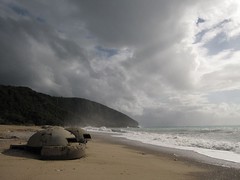
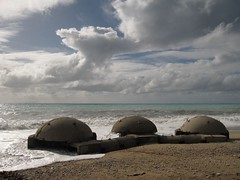
“One of the most talked about features of the Albanian landscape is the omnipresence of concrete bunkers: 700.000 in likely and unlikely locations throughout Albania” (Susan, 1998, p28).
http://www.flickr.com
The bunkers were a classic highlight for tourists coming to Albania and it was something unique. These bunkers made of concrete were built by the former dictator Enver Hoxha as defensive measures against possible invaders coming at the Albanian coast.
...and it gives you the impression of a defensive wall of bunkers, which was also the reason of building them. 
There are many ways these constructions have influence in landscape. 
First of all many of them lie in the beach and with the passing of years they have started to sink in the soft sand, they are subject of gathering rubbish and other types of waste. So in a way they destroy the beach and make it a dirtier place. It is true though that in some places along the Albanian coast, some big bunkers have been turned in coffee bars.
These were a few points on how politics has influenced in the changes of landscape in the last 20 years. 

I want to mention now some social or cultural reasons which in my opinion are to some extent connected to the by political ones. 
Even though they are committed by people of the area, they are somehow initiated by the changes in the political system. Among all others I want to emphasize something which I have witnessed myself, a change of landscape or better a ruin of the landscape. This, in my opinion, is the cause of political and social influences together. 
In the next photos you will see to what I am referring. 

This is a picture taken from the boat on 2003 and it shows the bay which I am talking about. The bay which I am talking about has always been a nice small bay where people could go and relax. 
It is the same place shown in the previous picture but different. 
As you can see the rocks have slide down ruining the small nice beach and the small caves do not exist anymore. Many people don’t know that landscape is a natural system very important for life on earth and important for people as well. 
By not knowing this they act without thinking that they are actually damaging the landscape and environment around them. 
The change between the two photos or better saying the destruction of the small bay is caused first by human action and second by governmental non action. 
In the process of building new cabins and other types of building in that area, in the last 10-15 years people have been collecting sand and gravel from the beach. They were obviously doing it in small faraway places like the small bay in the photo. 
After taking a considerable amount of sand and gravel the salted sea does the rest during the winter when the tide is higher and therefore the bay almost disappeared and the rocks fell on the beach. 
To many people it is not relevant and important what happens in the small bay and they don’t understand how landscape is connected with their life in that area. 
If they continue to make use of the landscape in order to increase their profits they will soon see their profits decreasing. In certain areas like the one we are talking about,tourists and visitors are attracted solely by the beauty of the landscape and environment. If with the passing of time natives will continue to destroy their landscape soon there will be no tourists to support their businesses. 
It is said that landscape reflects the culture of the people living in that area and it was like that before the last 20 years for this landscape. 
It was wild, untouched, and beautiful but this changed in the last 20 years. More and more people came in that region and in that village and they started to change their surroundings according to their needs. This happened to the stream coming from the mountain, going through the forest and finishing in the sea. 
I remember when I was there about 12 years ago that the stream was full of water and you could hear the water gurgle in the middle of the forest. It was also a good thing for the vegetation around and a very beautiful part of nature. 
Today if you follow the stream through the forest you will barely find some water flowing in it. People blocked the stream further up in the mountain so they could take the water for their purposes like building, for water resources and using it in different new buildings as everyday water. 
This is of course a human cause to the environment and to the beauty of landscape. It is something illegal to use the water of the stream for business purposes but this is still continuing nowadays and seems like it is not only a social fault, but also a governmental fault. 
The natural and physical attributes of the landscape have been changed directly and indirectly. This way it is easy to project this landscape in the future but looking that the reasons that cause this change are of different nature, political, social and cultural, the future is even more uncertain. 
I can say from my experience and from knowing the political and social situation in my country that this landscape has already entered the future. It is true that for the moment the situation on that area is not good, and many parts are covered with rubbish or are not cleaned by the natives themselves, but I have been thinking of a number of reasons why this situation will change. 


(TO BE CONTINUED...)
Firstly I believe that the new environmental reforms that our state is undertaking regarding the integration process will help in improving the situation of different landscapes and natural reserves in Albania....

Mar 31, 2012

Questionnaire on Turism in Albania


JU FTOJME TE
VIZITONI FAQEN E
LIDHUR ME TURIZMIN NE SHQIPERI.
JU LUTEMI TE PLOTESONI HAPESIRAT 
E VENA NE DISPOZICION.
fALEMiNDERIt!


VI INVITIAMO A 
VISITARE LA PAGINA DEL
QUESTIONARIO 
IN MERITO AL TURISMO IN ALBANIA.
VI PREGHIAMO DI RISPONDERE ALLE DOMANDE ASSEGNATE.
GRaZIe!

WE INVITE YOU TO 
VISIT THE PAGE OF
QUESTIONNIERE
ON TURISM IN ALBANIA.
PLEASE ANSWER TO THE QUESTIONS 
ALLOCATED.
THANKs!

Mar 30, 2012

A landscape to remember - Hans Bruzja (Part 1)


Know your place: landscape interpretation for outdoor practitioners 
Dhermi, a landscape to remember!

Albania is a country situated in the south-eastern part of Europe. Although being a small country, it has in it all kinds of landscape. 
Starting from the north, we have the Alps where there is snow all year round, many lakes in the mountains, waterfalls and some appropriate terrain for skiing slopes. Moving in the central part, we can find valleys, hills and mountains up to 1500 meters. While in the southern part there is a combination of high mountains over 1500 meters, rivers, valleys, forests and a beautiful beach. 
It is the southern part on which I want to focus in my landscape interpretation. 
That is actually my favorite part of Albania and I have been visiting that area since I was very young. Therefore I have seen it changing in time. 
Changes have been different, in physical appearance and also in terms of services provided to natives of that area and to tourists. The change of services has also influenced on landscape. 
The main reason why there is a radical change today compared to 20 years ago, is the change of the political system.
It was not until 1991 that the communist system collapsed and Albania embraced democratic governance. There are many differences between the two systems and these differences are consecutively reflected in the change of landscape. Other than that, there are many other cultural, social and geological reasons about the changes on that landscape. 
My intention is to share these changes and the reasons which brought to them in my landscape interpretation project. I have conducted a small activity when I was in Albania regarding the topic. Later on the paper I will further explain it. 
As I said the southern part is of my interest and I will focus my research in a place or village called Dhermi.
Down this village is a beautiful long beach with a forest next to it. In the last 20 years the shape and content of the landscape has changed in a visible way. I want to start speaking first from a historical perspective and for the climate in that area. Historically speaking, before 1991, meaning during communism, the area has been very little frequented by people because of the system at that time, for which I will speak later in the political perspective. 
Therefore there was not much human activity influencing on the forest, the beach and the terrain. Also according even to natives of that area, 40-50 years ago, the climate was much wilder and this wild climate  
with strong winds, rains and with a higher tide of the sea has made most of the rock spots round and not sharp as they were before. There are also big parts of rocks falling in the sea because of the water activity on them for hundreds of years. 
These can be considered natural changes on landscape and they happen over long periods of time. More important are changes which are not natural and which happen in short periods of time.

In the picture is shown a part of the landscape I am talking about and you can see the trees are not that dense in that area. As we know, nature or landscape is touched mostly by cultural, social and political issues. 
Looking the subject, which is Albania I would like to start from the political part. 
As I mentioned before, till 1991 Albania was under communism and different rules were applied in the society. One of them was about the maintenance of the natural habitats and natural landscapes. So the forest that you see in the picture above was very dense and had all sorts of tree fruits until 1997. During communism there was a scheduled caretaking for the forest, there were water canals to water the whole place and no one was allowed to take fruits or to go in the forest without any reason. 
These rules were valid till the beginning of 90’ till the communist traces disappeared completely. So in this case we have a political influence in protecting and maintaining the environment and landscape. 
I remember all the rules and measures because I have been visiting that place after the collapse of communism. 
It is really strange though how can politics and law influence in landscape. 
The difference in political system is very visible considering the fact that after 1991 in Albania people started having more freedom and their actions were not limited anymore. So areas which were frequented only by certain people could not be visited by everyone. This new trend, if I can called it like this, incited new investments in these areas looking that the number of visitors was increasing. This is the case for the area I am talking about. 
The free market and the right to open any kind of business was the new democratic trend in Albanian society and especially in the last 10 years, construction companies have been growing in number. The touristic promotion of the southern part of Albania and the high number of tourists made so that many new building started to be built in that area. 
The landscape then was subject to change. 
The next photos to show a small camping area with small cabins for tourists. 

It is visible the space created by cutting down trees and bushes in order to create some place for tents and cabins. 
Except the indirect political influence in this activity, it can also be the social influence. 
It is a handmade change from people of the area and still this comes from the political approach. 
In 1991, the new government decided to give a piece of land from the areas shown in the photo, to all the members of the former communist farms. This area has always been a property of the state and that is why it was so well maintained and it was like the highlight of the whole region there. 
By having a piece of land, native villagers decided to destroy the forest in order to build, camping sites, cabins and other buildings, to fulfill the tourism requirements and to increase their income. 
In fact it is totally normal to build a private hotel or private cabins but the fault of the state is that during this process, the government did not play a regulatory role, it did not put rules on where and how to build in order to protect the forest, the terrain and landscape.......


(TO BE CONTINUED...)
Another political aspect that has influenced in this landscape comes from communism times.....