Pages

Showing posts with label Green Economy. Show all posts

Jun 9, 2013

Urban Agriculture | Hotel For Insects

**Creative Sunday Series

‘‘The urban agriculture scene has become so big you could easily identify different sub-cultures and practices — from little community gardens to urban agriculture supply stores and large-scale urban farms, and from balcony composting to urban beekeeping and mushroom farms. So, what’s next? Insect hotels! ’’
via
via 
via
via 
via 
via 
via 
For more photos check out this website.

*********************************************************************

Mar 25, 2013

Open Invitation | I'm a City Changer

I'm a City Changer is a worldwide campaign with the aim of sensitizing and creating awareness among citizens on urban issues to achieve better cities. // 
Unë jam Ndryshuesi i Qytetit është një fushatë mbarë botërore me qëllim sensibilizimin dhe krijimin e ndërgjegjësimit qytetar mbi çështjet urbane për të përmirësuar qytetet.

 1. 21st century challenges are in cities // Sfidat e shekullit 21 janë në qytete
 2. World population is growing // Popullsia botërore po rritet
 3. For no slums // Për asnjë lagje të varfër
 4. For facing climate change // Për përballjen me ndryshimin e klimës
 5. For fewer emissions // Për më pak emetime
 6. Urban areas are an economic opportunity // Zonat urbane janë një mundësi ekonomike
 7. Cities are the future of younger generation // Qytetet janë e ardhmja e brezave të rinj
 8. Cities are creative and productive // Qytetet janë kreativ dhe produktiv
 9. We love cities // Ne i duam qytetet
10. It is the time to change // Është koha për ndryshim

To learn more about the Campaign and Add your story, check out their website.


I'm a City Changer Campaign works to achieve better cities and better life fostering proper sustainable urban development through key core components:

A Resilient City - Prepare cities for change, managing adversity, resilience and take action to reduce risk. Urbanization and development can only be sustainable if it is adaptable to future demands and risks, and is resilient to the consequences of climate change or natural disasters. Empowering cities and communities to plan for and effectively manage adversity is fundamental to the urban agenda.

A Green City - Build environmentally sound and carbon efficient cities. Buildings alone account for 30% of greenhouse gas emissions, and the way we plan and design our cities now will have significant implications for how resilient, resource efficient and environmentally sound they are in the future. A green city means promoting sustainable development through a carbon efficient built environment.

A Safe and Healthy City - Make cities safer and healthier. Cities hold the answers to challenges posed by urbanization, which are in turn inextricably linked to issues of and agendas concerning the economy, climate change, resource consumption, food security and more. Cities need to be highly livable environments in order to capitalize on their tremendous potential as the drivers of sustainable solutions to our current and future challenges.

An Inclusive City - Build socially inclusive, accessible, pro-poor, equitable and gender sensitive cities. Socially equitable development is one of the three pillars of sustainability, and is vital to creating a shared, sustainable urban future. The challenges posed by the pace and scale of contemporary urbanization require us to invest in infrastructure, development and political processes that promote inclusivity, and a pro-poor, gender sensitive agenda. An inclusive city promotes equitable rights to the city and therefore allows all citizens to partake of the urban advantage.

A Planned City - Plan the cities of tomorrow for sustainable decision-making processes. Sustainable urbanization and development requires planning processes and political frameworks that harness the city's assets and potential. Sustainable planning entails participatory decision making processes and particular attention to development that balances social, environmental and economic needs. Of equal importance, sustainable planning and a planned city are fundamental to achieving the characteristics of all other World Urban Campaign thematic areas.

A Productive City -- Make cities more efficient and better places to ensure decent work. Economically equitable development is also one of the three pillars of sustainability, and a requisite component of any healthy, livable and sustainable city. Pursuing a sustainable development agenda means planning cities that promote and foster livelihoods for all citizens through economic opportunities.

**I'm a City Changer campaign is convened by UN-Habitat, the United Nations Human Settlements Programme, with support from partners from the private and public sector.

*******************************************************************************************

Jul 19, 2012

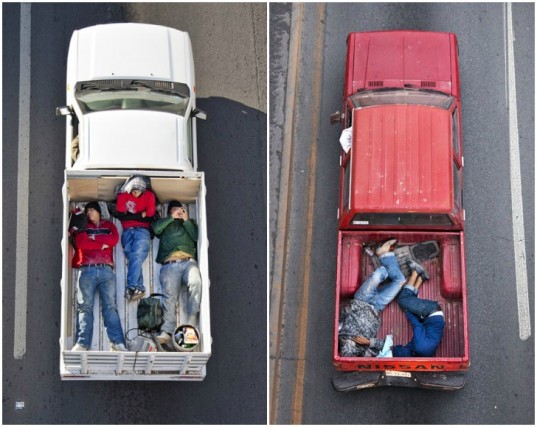
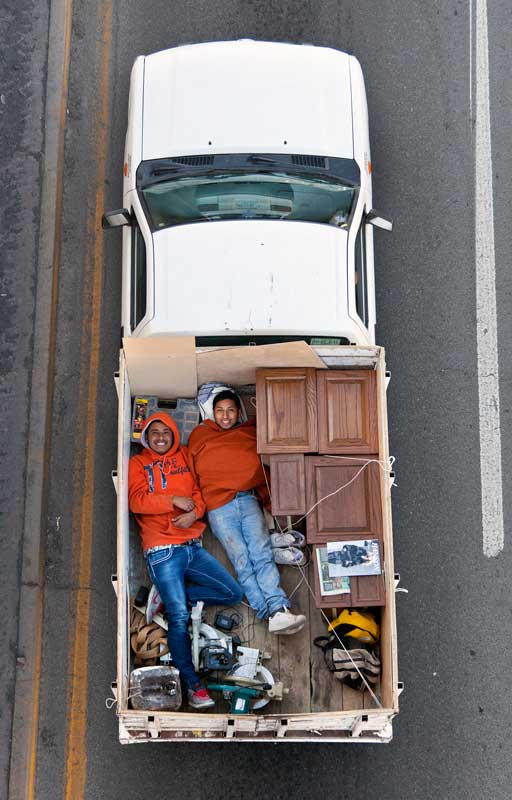
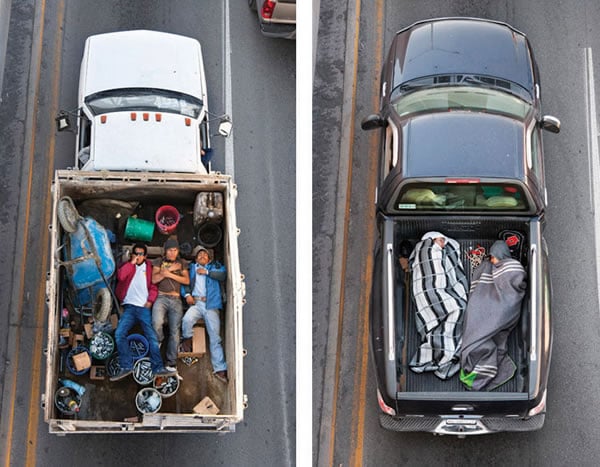
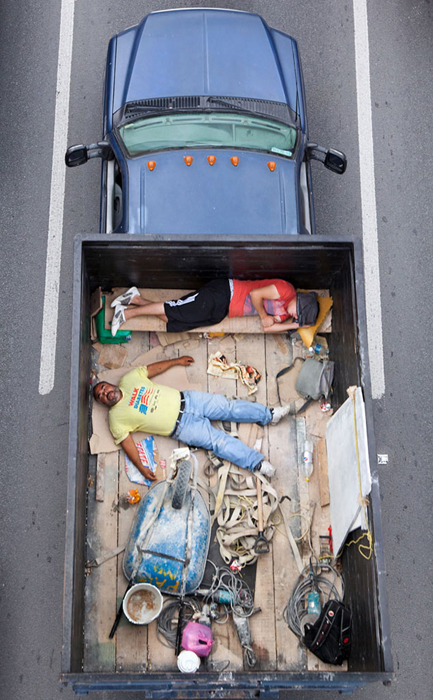
Photography / Carpooling

Te udhetosh me makine ju merr shume kohe dhe kushton shume para? Ne Meksike zgjidhja eshte me "carpooling".  Alejandro Cartagena beri nje projekt dhe fitoi cmimin  IILA-FotoGrafia


Fitoi cmimin  IILA-FotoGrafia ne konkursin e Festivalit Nderkombetar te Romes.  ALEJANDRO CARTAGENA  fotografon punetoret meksikane qe kursejne kohe dhe para per te shkuar ne pune...duke kaluar qytete. Ky studim social zbulon fenomenin   "carpooling".  


Con i suoi Car Poolers s'è conquistato il premio IILA-FotoGrafia, nell'ambito del Festival Internazionale di Roma. ALEJANDRO CARTAGENA immortala gli operai messicani che risparmiano soldi e tempo per andare a lavoro, attraversando città ormai troppo grandi e caotiche. Un'efficace indagine dal taglio sociale, che vi svela qualcosa sul "carpooling"...

I ka fotografuar nga lart, te shtrire, te mbledhur, te kerrusur, permbys, me barkun lart, brenda bagazheve / rimorkjove te makinave dhe furgone. Punetoret meksikane, ne udhetim drejt vendit te punes duke ndare rrugen, rutinen, veshtiresite dhe parate e pakta qe kane ne xhep...

 Li ha fotografati dall’alto, distesi, rannicchiati, accovacciati, spaparanzati dentro i vani posteriori di grosse auto e furgoni. Operai messicani, in viaggio verso il posto di lavoro, a condividere il tragitto, la routine, la fatica e i pochi spiccioli in tasca.


Artikullin e plote e gjeni KETU 


Jul 14, 2012

FESTIVAL RAVENNA 2012 / AMBIENTI


Cos'è Ravenna2012:

E' un festival su rifiuti, acqua, energia; tre giorni di incontri di tipo informativo - formativo dedicati alle tematiche tecnico-economiche; è previsto un ricco programma di eventi culturali.


Deshiroj t'iu njoh me EVENTIN me te RENDESISHEM qe organizohet cdo vit mbi AMBJENTIT ne qytetin e Ravennes (IT). 

Quhet Festival mbi MBETURINAT, UJIN, ENERGJINE. 

Fjala FESTIVAL per te kuptuar shumellojshmerine e aktiviteteve qe perbejne kete EVENIMENT.  

Tre dite te mbushura me takime formuese dhe INFORMUESE ne lidhje me tematikat teknike si edhe ekonomike. 

Bashkengjitur programit organizohen nje sere 

Eventesh KULTURORE. 

SEPSE AMBJENTI LIDHET PANDARSHMERISHT ME 

ARTIN DHE KULTUREN!!!


26/27/28 SHTATOR ne RAVENNA (IT)


Edicioni i peste do te kete emrin "TE BESH LLOGARITE ME AMBJENTIN" Ravenna 2012. 

Ne kete FESTIVAL do te gjeni 

6 Konferenca - me te ftuar nga i gjithe globi, me kontribute te universiteteve, te kerkuesve, te ndermarrjeve, mass-media dhe bota e Shoqerive jo fitim prurese. 

16 Workshop - takime ku thellohen njohurite e fundit dhe shperndahet zhvillimet e arrira. 

20 LabMeeting (takime laboratorike) - ku kryhet formimi dhe informimi. Keto kurse jane me numer te mbyllur. 

12 Evente Kulturore - Kerkimi, njohja, inovacioni, arti dhe kultura te pare si terren ideal ne te cilin te nise nje menyre e re mendimi, veprimi dhe KOMUNIKIMI. 


Per me shume info mund te vizitoni faqen dedikuar ketij eventi. LABeLAB 

Apr 13, 2012

A landscape to remember - Hans Bruzja (Part 3)

Know your place: landscape interpretation for outdoor practitioners Dhermi, a landscape to remember!


(Part 1. ...I have conducted a small activity when I was in Albania regarding the topic. Later on the paper I will further explain it. As I said I will focus my research in a place or village called Dhermi.....
& 
Part 2. It is true that for the moment the situation on that area is not good, and many parts are covered with rubbish or are not cleaned by the natives themselves, but I have been thinking of a number of reasons why this situation will change.... )


Firstly I believe that the new environmental reforms that our state is undertaking regarding the integration process will help in improving the situation of different landscapes and natural reserves in Albania.
This is the case for my favorite landscape, the one we are talking about.
In a few years I believe the state will return to its position as a regulatory tool for tourism and business. This will definitely touch the landscape in Dhermi (the name of the village) and natives will finally understand that their life and business is dependent on the landscape. They will care for it more than anything.
The reasons why the landscape changed were mainly political and human caused.
While the change that I predict for the future will be in synchronization between them.
First the government has to take the situation under control and people will be conscious and will have the awareness of their surroundings.
For the cultural part I think there will not be many changes in the future. The southern part of Albania has a big influence from Greece and this is reflected especially in religion.
All natives of that area are Christian orthodox and around the forest there are many small chapels and also big churches near the village.
One thing that did not change was the maintenance of these churches.
They resisted to communism which was against any kind of religion and they have been maintained by natives of the area for the last 20 years.
Today many tourists visit the hundred year’s old churches and small chapels or temples where people can pray or just enjoy the culture differences.
In my opinion this religious culture will not change and therefore the cultural landscape will be the same, preserving the old tradition.
I believe this way because I know that in Albania there is harmony between religions. So in my perspective the future of this landscape will be a better one. In physical terms, I would say that what is already ruined will take years to be restored, like for example trees and other vegetation but the rest will hopefully be maintained and used efficiently for the good of natives, tourists and of course nature.
I decided that all the observations I have made in these years should be communicated and delivered to people in order to see the impact it has on them. For this I decided to use the simple method of walk and talk. I cannot consider them as interviews because it was mostly talks.
When I was in Albania 1 month ago I decided to talk to people in my city about all these changes in the last 20 years that happened in Dhermi; decided to address only to persons between the age of 40-60 years old because they might have visited the place during communism time and after it, so I wanted to hear their opinion and their reaction. I talked to 20 persons, many of them did not visit the village and the beach during communism because not everyone was allowed to go there, but they had been in the last 20 years.
6 persons had visited the place in both periods.
After talking to them and explaining my observations, the changes and their reasons, all of them agreed on the current situation. The persons, who had not visited the place during communism, were worried mostly about the pollution of the environment and they were aware that something must be done for that place. While the 6 persons who had visited the place on both periods were more revolted to what has happened there in the last 20 years. They were remembering how the place was 20 years ago and how it is now. For them the changes were drastic and they were blaming mostly the government. From their reaction I understood that the place was much more different when they were young, meaning 30 years ago. 
This is the small activity I used to convey my interpretation of this landscape for the last 20 years. If I would analyze the approach I took for this activity I would say that there are positive and negative features in it.
The positive one I think is the selection of the audience. I chose the age group of 40-60 years old because they have witnessed more in the political, social and cultural history of the country and they have been living in both political systems, so they are able to make a better distinction. If I would have asked young people around the age of 25 I am sure that they would not be very much worried about the landscape as long as there are nice hotels, bar and pubs for them near the beach.

While regarding the negative parts of my approach or better saying what I could have done better, it has to do with the place where I did these talks. I met people in my city, in the capital and it would have been much better if I could have asked natives of Dhermi village. 
The natives have been living there so for them the changes are even more obvious. Maybe by asking some people who were actually part of the social changes to the landscape I could have gotten some more appropriate answer and reasons why all this happened. Maybe a more detailed research and a higher number of people asked could have given more information on the awareness of people about landscape in Albania.
I choose the village of Dhermi not only as my favorite landscape in Albania but also as one of the most frequented touristic place in Albania in the last 10 years.
After all this thinking, analyzing and evaluating, a few questions come into my mind.
It is more appropriate though to introduce some real questions about landscape.
Is landscape a scene we are looking at, or a world we are living in?
Is landscape all around us or just in front of us?
Do we observe or inhabit landscape?
(Wylie, 2007, p.4)
It is through these questions that people should start thinking more for the landscape around them. They should start to understand that landscape is part of us and that we are part of it.
We were born in nature and that’s where we are supposed to live. 
Therefore we should take care of the nature just as we take care of ourselves.
Imagine a world without nice and beautiful landscapes? 
It would not be called our world anymore.

Apr 6, 2012

A landscape to remember - Hans Bruzja (Part 2)

Know your place: landscape interpretation for outdoor practitioners Dhermi, a landscape to remember!

( Part 1 "....In fact it is totally normal to build a private hotel or private cabins but the fault of the state is that during this process, the government did not play a regulatory role, it did not put rules on where and how to build in order to protect the forest, the terrain and landscape.)

Another political aspect that has influenced in this landscape comes from communism times. 
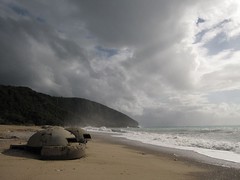
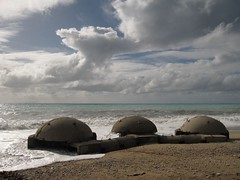
“One of the most talked about features of the Albanian landscape is the omnipresence of concrete bunkers: 700.000 in likely and unlikely locations throughout Albania” (Susan, 1998, p28).
http://www.flickr.com
The bunkers were a classic highlight for tourists coming to Albania and it was something unique. These bunkers made of concrete were built by the former dictator Enver Hoxha as defensive measures against possible invaders coming at the Albanian coast.
...and it gives you the impression of a defensive wall of bunkers, which was also the reason of building them. 
There are many ways these constructions have influence in landscape. 
First of all many of them lie in the beach and with the passing of years they have started to sink in the soft sand, they are subject of gathering rubbish and other types of waste. So in a way they destroy the beach and make it a dirtier place. It is true though that in some places along the Albanian coast, some big bunkers have been turned in coffee bars.
These were a few points on how politics has influenced in the changes of landscape in the last 20 years. 

I want to mention now some social or cultural reasons which in my opinion are to some extent connected to the by political ones. 
Even though they are committed by people of the area, they are somehow initiated by the changes in the political system. Among all others I want to emphasize something which I have witnessed myself, a change of landscape or better a ruin of the landscape. This, in my opinion, is the cause of political and social influences together. 
In the next photos you will see to what I am referring. 

This is a picture taken from the boat on 2003 and it shows the bay which I am talking about. The bay which I am talking about has always been a nice small bay where people could go and relax. 
It is the same place shown in the previous picture but different. 
As you can see the rocks have slide down ruining the small nice beach and the small caves do not exist anymore. Many people don’t know that landscape is a natural system very important for life on earth and important for people as well. 
By not knowing this they act without thinking that they are actually damaging the landscape and environment around them. 
The change between the two photos or better saying the destruction of the small bay is caused first by human action and second by governmental non action. 
In the process of building new cabins and other types of building in that area, in the last 10-15 years people have been collecting sand and gravel from the beach. They were obviously doing it in small faraway places like the small bay in the photo. 
After taking a considerable amount of sand and gravel the salted sea does the rest during the winter when the tide is higher and therefore the bay almost disappeared and the rocks fell on the beach. 
To many people it is not relevant and important what happens in the small bay and they don’t understand how landscape is connected with their life in that area. 
If they continue to make use of the landscape in order to increase their profits they will soon see their profits decreasing. In certain areas like the one we are talking about,tourists and visitors are attracted solely by the beauty of the landscape and environment. If with the passing of time natives will continue to destroy their landscape soon there will be no tourists to support their businesses. 
It is said that landscape reflects the culture of the people living in that area and it was like that before the last 20 years for this landscape. 
It was wild, untouched, and beautiful but this changed in the last 20 years. More and more people came in that region and in that village and they started to change their surroundings according to their needs. This happened to the stream coming from the mountain, going through the forest and finishing in the sea. 
I remember when I was there about 12 years ago that the stream was full of water and you could hear the water gurgle in the middle of the forest. It was also a good thing for the vegetation around and a very beautiful part of nature. 
Today if you follow the stream through the forest you will barely find some water flowing in it. People blocked the stream further up in the mountain so they could take the water for their purposes like building, for water resources and using it in different new buildings as everyday water. 
This is of course a human cause to the environment and to the beauty of landscape. It is something illegal to use the water of the stream for business purposes but this is still continuing nowadays and seems like it is not only a social fault, but also a governmental fault. 
The natural and physical attributes of the landscape have been changed directly and indirectly. This way it is easy to project this landscape in the future but looking that the reasons that cause this change are of different nature, political, social and cultural, the future is even more uncertain. 
I can say from my experience and from knowing the political and social situation in my country that this landscape has already entered the future. It is true that for the moment the situation on that area is not good, and many parts are covered with rubbish or are not cleaned by the natives themselves, but I have been thinking of a number of reasons why this situation will change. 


(TO BE CONTINUED...)
Firstly I believe that the new environmental reforms that our state is undertaking regarding the integration process will help in improving the situation of different landscapes and natural reserves in Albania....

Mar 30, 2012

A landscape to remember - Hans Bruzja (Part 1)


Know your place: landscape interpretation for outdoor practitioners 
Dhermi, a landscape to remember!

Albania is a country situated in the south-eastern part of Europe. Although being a small country, it has in it all kinds of landscape. 
Starting from the north, we have the Alps where there is snow all year round, many lakes in the mountains, waterfalls and some appropriate terrain for skiing slopes. Moving in the central part, we can find valleys, hills and mountains up to 1500 meters. While in the southern part there is a combination of high mountains over 1500 meters, rivers, valleys, forests and a beautiful beach. 
It is the southern part on which I want to focus in my landscape interpretation. 
That is actually my favorite part of Albania and I have been visiting that area since I was very young. Therefore I have seen it changing in time. 
Changes have been different, in physical appearance and also in terms of services provided to natives of that area and to tourists. The change of services has also influenced on landscape. 
The main reason why there is a radical change today compared to 20 years ago, is the change of the political system.
It was not until 1991 that the communist system collapsed and Albania embraced democratic governance. There are many differences between the two systems and these differences are consecutively reflected in the change of landscape. Other than that, there are many other cultural, social and geological reasons about the changes on that landscape. 
My intention is to share these changes and the reasons which brought to them in my landscape interpretation project. I have conducted a small activity when I was in Albania regarding the topic. Later on the paper I will further explain it. 
As I said the southern part is of my interest and I will focus my research in a place or village called Dhermi.
Down this village is a beautiful long beach with a forest next to it. In the last 20 years the shape and content of the landscape has changed in a visible way. I want to start speaking first from a historical perspective and for the climate in that area. Historically speaking, before 1991, meaning during communism, the area has been very little frequented by people because of the system at that time, for which I will speak later in the political perspective. 
Therefore there was not much human activity influencing on the forest, the beach and the terrain. Also according even to natives of that area, 40-50 years ago, the climate was much wilder and this wild climate  
with strong winds, rains and with a higher tide of the sea has made most of the rock spots round and not sharp as they were before. There are also big parts of rocks falling in the sea because of the water activity on them for hundreds of years. 
These can be considered natural changes on landscape and they happen over long periods of time. More important are changes which are not natural and which happen in short periods of time.

In the picture is shown a part of the landscape I am talking about and you can see the trees are not that dense in that area. As we know, nature or landscape is touched mostly by cultural, social and political issues. 
Looking the subject, which is Albania I would like to start from the political part. 
As I mentioned before, till 1991 Albania was under communism and different rules were applied in the society. One of them was about the maintenance of the natural habitats and natural landscapes. So the forest that you see in the picture above was very dense and had all sorts of tree fruits until 1997. During communism there was a scheduled caretaking for the forest, there were water canals to water the whole place and no one was allowed to take fruits or to go in the forest without any reason. 
These rules were valid till the beginning of 90’ till the communist traces disappeared completely. So in this case we have a political influence in protecting and maintaining the environment and landscape. 
I remember all the rules and measures because I have been visiting that place after the collapse of communism. 
It is really strange though how can politics and law influence in landscape. 
The difference in political system is very visible considering the fact that after 1991 in Albania people started having more freedom and their actions were not limited anymore. So areas which were frequented only by certain people could not be visited by everyone. This new trend, if I can called it like this, incited new investments in these areas looking that the number of visitors was increasing. This is the case for the area I am talking about. 
The free market and the right to open any kind of business was the new democratic trend in Albanian society and especially in the last 10 years, construction companies have been growing in number. The touristic promotion of the southern part of Albania and the high number of tourists made so that many new building started to be built in that area. 
The landscape then was subject to change. 
The next photos to show a small camping area with small cabins for tourists. 

It is visible the space created by cutting down trees and bushes in order to create some place for tents and cabins. 
Except the indirect political influence in this activity, it can also be the social influence. 
It is a handmade change from people of the area and still this comes from the political approach. 
In 1991, the new government decided to give a piece of land from the areas shown in the photo, to all the members of the former communist farms. This area has always been a property of the state and that is why it was so well maintained and it was like the highlight of the whole region there. 
By having a piece of land, native villagers decided to destroy the forest in order to build, camping sites, cabins and other buildings, to fulfill the tourism requirements and to increase their income. 
In fact it is totally normal to build a private hotel or private cabins but the fault of the state is that during this process, the government did not play a regulatory role, it did not put rules on where and how to build in order to protect the forest, the terrain and landscape.......


(TO BE CONTINUED...)
Another political aspect that has influenced in this landscape comes from communism times.....


Mar 20, 2012

MOBILIciTY | Tirana Multimodel Station Competition

via AWR Competitions   

Among other initiatives, the Municipality of Tirana collects ideas for a new railway station. 
AWR - Architecture Workshop in Rome 
with 
Polis University 
and under the Albanian railway system Patronage, proposes: 


MOBILIciTY 
Ideas Competition for the definition of a Masterplan for Tirana’s Intermodal Station
 
via AWR Competitions  
The international competition will have as the main goal the re-appropriation of the city of Tirana in terms of mobility and transport on iron. In collaboration with the Tirana Municipality, the competition event in Tirana will gather ideas from students and young architects from around the world, in response to the need for a complete renovation of the city. Tirana multimodal station will be the title of the international competition. Even in this case, the head of the jury will be an architect of international renown from the Netherlands. This event of the Tirana Architecture Week requires a different time frame, starting from March 1, 2012, with the registration of the participants and continuing in June with the registration deadline. From July through September, the jury, composed of representatives of each promoter, will give early assessments and will later announce the winners. The work and ideas generated from the event will result in series of possible solutions to consider. The strong international impact and success of this competition will be guaranteed not only by a jury of architects and specialists of international importance but also by the fact that this is the First ever Competition of Ideas on an Intermodal Station organized in Tirana. 
via AWR Competitions   

With the patronage of :
“POLIS - International School of Architecture & Urban Development Policies”, “Municipality of Tirana”,”TAW - Tirana Architecture Week”, “UNIFE - Università di Ferrara”, “FAF - Facoltà di Architettura di Ferrara”, “ANHALT University of Applied Science”, “HSH Albanian Railways”, “AUA - Albanian Union of Architects”
 
via AWR Competitions   

REGISTRATIONS ARE OPEN THROUGH JUNE 30!!!
APPLY NOW !!!

Mar 19, 2012

Outdoor Albania | Rafting

Summer's around the corner, 
so gear up and be ready to experience 
the beautiful, the adventurous, the unspoiled
Albanian terrain.


Mar 8, 2012

Rafting in Albania @TEDxTirana

In this TEDxTirana presentation, Blerina Ago talks about taking up rafting in Albania and turning it into an environmentally friendly, tourism promoting and cultural institution. Listen to her story, her passion and maybe you'll want to give it a try this summer.
Blerina Ago was born in Berat, Albania. She is the founder of 'Berat Festival,' one of the major annual trends in the district. At 14, Blerina becomes the first girl who dares practicing rafting in Albania, a brand new sport for Albanians. Through persistent work she establishes the first sportive association of rafting in Albania, namely the "Albania Rafting Group" and since 26 May 2012 is the General Secretary of the Albanian Rafting Federation. A TEDxTirana Production. All rights reserved.
Blerina Ago - Albania in the Streams of a New Passion from TEDxTirana on Vimeo.


Mar 3, 2012

Where the Game stops and the Work begins...

"Where do ideas come from?
From looking at one thing and seeing another.
From fooling around, and playing with possibilities.
From speculating. And changing.
Pushing, pulling.
Transforming.
And if you're lucky, you come up with something worth
saving, using, and building on.
That's where the game stops, and the work begins."


Yves Béhar :: Why Designers Should Be In Love With The Process


Mar 2, 2012

New Image of Albania @TEDxTirana


Check out this TEDxTirana talk by Suela Kusi on E-Marketing a New Image of Albania.
TEDxTirana Production. All rights reserved.
Suela Kusi is presently Director of European Integration and Coordination of International Cooperation in the Albanian Ministry of Tourism, Culture, Tourism, Youth and Sports. She is responsible at ensuring effectively co-ordination the foreign assistance to directly support the Government’s priorities in the field of tourism, culture, youth and sports. Since 2005 she is senior lecturer of “Human Rights” and “Development Theory” in the Department of Social Work, at University of Tirana. Her main areas of interest and expertise include research in social sciences human rights and development issues. Her experiences in these areas include qualitative and quantitative research focused especially on issues related to human rights, children rights, poverty reduction and development policies etc. In addition, she has various experiences in compiling training manual and conducting trainings in the area of human rights and issues related to it, such as education, health, child protection, gender-based violence, poverty reduction and development. 

Suela Kusi - E-motives of Marketing the New Image of Albania from TEDxTirana on Vimeo.

[for more videos of TEDxTirana visit them on Vimeo]


-----------------------------------------------------------------------------------------------

Feb 17, 2012

1st Talk @ TEDxTirana

The first TEDxTirana event was held back in October 2011. Here's a video of this very exciting talk. Mihallaq Qirjo raises awereness on Pro Environmental Behavior - Refuse, Reduce, Reuse and Recycle. 

I want to congratulate the organizers for bringing such a global initiative to Tirana. I am sure we will meet some seriously interesting people and learn more about their latest innovative thinking.

For more information visit their website at TEDxTirana or Facebook page.


from TEDxTirana on Vimeo.

Feb 6, 2012

Public Trash Bins as Public Game Stations

via freshome
PERfACTs eshte gjithmone ne kerkim te menyrave krijuese, efikase dhe zbavitese per tu marre me problemet urbane qe perballim cdo dite ne qytetet dhe hapesirat tona publike. Sjellja e pahijshme e qytetareve [keqperdorimi, abuzimi] luan nje rol te madh ne to. Prandaj dhe ne perpiqemi te gjejme zgjidhje qe influencojne pozitivisht kete qendrim urban. Kemi folur per projekte te suksesshme dhe me pare, ketu, ketu, ketu dhe ketu, por ja ku eshte dhe nje tjeter, shume me i thjeshte.
Per te stimuluar banoret te behen me te vetedijshem dhe te pergjegjshem per hedhjen e mbeturinave, qyteti zvicerian i Luzernit ka paraqitur nje iniciative argetuese dhe interaktive te quajtur “Luzerni Shkelqen.” Gjashtembedhjete kosha plehrash jane konvertuar ne stacione publike loje. Nje menyre teper inovative, e thjeshte dhe e pakushtueshme per te nxitur njerezit te bejne gjene e duhur, projekti ka pasur pjesemarrje dhe rezultate te jashtezakonshme. Jo vetem qe ka patur nje reduktim te plehrave ne rruge, por qyteti ka shpenzuar me pak nga leket e takspaguesve per pastrim.

Zgjidhjet kaq te thjeshta mund te kene nje ndikim te madh ne ndryshimin e sjelljes publike, edhe pse te perkohshme apo te shpejta, ato mund te shnderrojne dinamiken urbane. Eshte kjo qasje katalizuese qe ne duhet te ndjekim, duke e aplikuar fare kollaj ne Tirane; sikur dhe vetem per te pare se cfare do ndodhi. Te vetmet gjera qe na duhen eshte boja dhe nje liste me lojra. Apo Jo?
via freshome
PERfACTs is always looking for creative, efficient and fun ways that deal with urban problems we face every day in our cities and public spaces. Citizen misconduct [misuse, abuse] plays a big part in that. That’s why we try to find solutions that positively influence this urban behavior. We have talked about a few successful projects before, here, here, here and here, but here’s another, a very simple one.
To incentivize its residents to become aware and more responsible when it comes to littering, the Swiss city of Lucerne put forth a fun and interactive initiative called “Lucerne Shines.” Sixteen trash bins were converted to public game stations. A very innovative, simple and cheap way of getting people to do the right thing, it has gotten great participation and results. Not only there was a reduction of trash on the streets, but the city spent less taxpayers’ money on cleanup. 

Solutions this simple can have a big impact in changing public behavior, even though temporary or quick, they can alter urban dynamics. It is this catalyzing approach that we should take, easily applying it in Tirana; just to see what happens. All we need is some paint and a list of games. No?
via freshome
-------------------------------------------------------------------------

Jan 29, 2012

Sunday Streets | Pse jo edhe ne Tirane?

Cfare mund t'i ndodh nje lagjeje, kur rruget i transformohen nga korsi makinash ne hapesira per kembesore? What could happen to a neighborhood when streets are transformed from car lanes into pedestrian spaces?

Cdo te Djele (ashtu si dhe per festa) rruge te caktuara kryesore te Bogotá, Cali, Medellín, dhe komuna te tjera Kolumbiane perdoren vetem nga kembesoret: thjeshte si kalimtare ose per aktivitete argetuese dhe sportive. Transporti automobilistik eshte i ndaluar. Ky event quhet Ciclovía dhe i ka fillimet qe ne fund te viteve '70.
Each Sunday (and holiday) certain main streets of Bogotá, Cali, Medellín, and Colombian other municipalities, are used by pedestrians only: as passersby or for entertainment and sports activities. Automotive transportation is blocked off. This event is called Ciclovía and it has taken place since late the late 70s.

Kjo iniciative ka frymezuar shume qytete te tjera ne te gjithe boten. Nje nga keto eshte San Francisco ne Kaliforni.
Programi Sunday Streets (Rruget te Djelen) eshte eksperimenti me i madh i ketij qyteti, ku me shume hapesira publike iu kthehen njerezve. Ne cdo event, disa kilometra rruge mbyllen per trafikun automobilistik dhe hapen per ecje, vrap, bicikleta, patina, dhe aktivitete nga me te ndryshmet. Organizatoret shpresojne se programi do te ndihmoje ne ndertimin e komunitetit lokal, permiresimin e shendetit, si dhe per promovimin e nje transporti te qendrueshem.
This initiative has inspired many other cities throughout the world. One of them is San Francisco, California.
San Francisco's Sunday Streets program is the city's biggest experiment to transfer more of the public realm to people. At each event, several miles of roads are closed to traffic and opened for walking, riding, and a variety of other activities. Organizers hope that the program will help build community, improve health, and promote sustainable transportation.

Rruget te Djelen filloi ne 2008 me tre evente dhe cdo vit ka qene me i madh dhe me i suksesshem se i pari.
Sunday Streets began in 2008 with three events and each year has been bigger and more successful than the previous. [for more info visit sundaystreetssf.com]

Watch more videos at NENtv

Sunday Streets, "eksperimenti" pa makina i qytetit te San Francisco pati nje pjesemarrje shume te madhe. Rruget u mbushen plot me njerez.
Si ndikoi kjo tek bizneset aty perreth?
Eshte bllokimi i trafikut automobilistik (edhe pse per disa ore) dicka e mire apo jo per bizneset lokale?
Sunday Streets, San Francisco's car-free "experiment", received a huge turnout. People flooded the streets.
How were local businesses affected?
Is closing the streets to cars (eventhough for a few hours) good or bad for local businesses?


Ne duhet te ndjekim kete shembull. Le ti kerkojme qytetit te Tiranes te provoje nje "eksperiment" te tille.
Le t'i kthejme me shume hapesira publike njerezve dhe jo makinave.
Le te ndihmojme ne ndertimin e komuniteteve, permisimin e shendetit, dhe promovimin e nje transporti te qendrueshem.
[te pakten te Djelave, edhe pse per pak ore]
We need to follow by example. Let's ask the city of Tirana to try a similar "experiment".
Let's return more of the public realm to people and not cars.
Let's help build communities, improve health, and promote sustainable transportation.
[at least on Sundays, just for a few hours]

Dua te di se cfare mendoni ju te gjithe.
Le ta organizojme edhe ne Tirane.
I'd like to know what all of you think.
Let's make it happen in Tirana.