Pages

Showing posts with label Balcani 20 anni dopo. Show all posts

Jan 16, 2013

Open Invitation | Short Film Festival 2013 "Reinvent Bridges"


Call for Submission
Balkans Beyond Borders 
Short Film Festival 4th Edition
Bucharest 2013


Balkans Beyond Borders has opened the call for submissions for the:4th edition of Short Film Festival 2013, REINVENT BRIDGES
“Our contemporaneity is manifested as a time when we analyse everything. The present is not only a transitory instance, but becomes a site of permanent rewriting of the past and the future, of permanent rewriting of history.” (Boris Groys)
With the fall of the Berlin wall and with the end of the Cold War, Europe entered a new historical era. Marked by the Communist past and the European Union future many of the countries have undergone radical changes in the last 23 years. The Balkan countries and their people, though neighbors  do not share the same personal, historical, political and social experience of these changes. As a result even their expectations about the future are different.
- What questions and issues about the past and the future are important for the present? 
- How are the Balkans, with all their diversity, rewriting their past and reinventing their future? 
- How to translate or embody this into moving images? 

The submission opened on December 17, 2012 and will run until the June 1,2013.
The festival will take place in Bucharest in September 2013. 

Artists, 35 years old or younger from the Balkan region and beyond (Southeast Europe) are invited to send their own short films related to the above subject. 

More information on how to apply is available on their website.
You can find BBB on Facebook and Twitter.

Tags: BBB Talk To Me 2012

Jun 13, 2012

MARATONA "Per nje jete te sigurt ne rruge te pastra"


Ne ju ftojme te merrni pjese ne menyre aktive ne maratonen sportive / sensibilizuese te dates 1 KORRIK 2012 qe mban titullin "Per nje jete te sigurt ne rruge te pastra" dhe do te organizohet ne nje nga zonat me turistike te Shqiperise.  Ne oren 5:00 grupi niset nga fshati VUNO drejt kryeqendres HIMARE duke bere nje ndalese perkujtimore ne Qafe te Vishes. 
Ne bashkepunim me PERfACTs dhe shoqata te interesuara krijojme nje alternative zbavitese, informuese dhe mbi te gjitha sensibilizuese. Ne synimet e kesaj maratone jane perballja me tema aktualisht te gjalla ne shume tryeza si kombetare ashtu edhe nderkombetare, sikurse organizimi i nje evenimenti gjitheperfshires i cili te nxise te rinjte per aktivitete ne ajer te paster.
Aresyet e kesaj levizje sportive jane:
- Mbrojtja dhe siguria ne rruge,
- Ruajtja e ambjentit (UJE, AJER, TOKE),
- Sensibilizimi i rinise aktive,
- Bashkepunimi mes qytetareve dhe strukturave shteterore,
Maratona na pergatit shpirterisht qe te trajtojme tema por edhe fizikisht ne perballimin e nje distance personale. Individualizmi ne vrapim dhe reflektimi personal do te jete i dobishem per te mbajtur konstant fokusin ne temen kryesore: “Per nje jete te sigurte ne rruge te pastra”.
Etapat:
Maratona me itinerar Vuno - Himare ka nje gjatesi prej rreth 8 km dhe eshte e pershkueshme ne rreth 40 minuta. Kerkohet nje stervitje mesatare. 
Nisja do te behet rreth ores 5:00 nga qendra e fshatit Vuno.
Nje ndalese perkujtimore do te jete ne uren e Qafes se Vishes per te nderuar ata qe humben jeten ne 21 MAJ 2012. 
Kush te doje mund te hedhe mbi rrenojat e autobuzit famekeq, lule te fresketa ne kujtim te jeteve qe u ndalen ne ate humnere. Deri ne kete pike jane afro 4 km dhe kerkohet pjesmarrja e te gjitheve. (Maratonistet qe nuk munden te vrapojne mund te pershkojne kete distance me ecje!)
Per pjesen tjeter ndalesa e perfundimtare do te jete ne qendren e Himares.

Duke ju rikujtuar diten e diele ne date 1 KORRIK 2012 ora 05:00 ju ftojme qe te beheni pjese e kesaj levizje sportive e kulturore!


Per info ELMA: 
elma.mela@gmail.com

Jun 12, 2012

Made in Albania


"Made in ALBANIA"

Il più bello, veritiero e coinvolgente documentario/film sull'Albania.
Stefania Casini in collaborazione con Era film e l'Istituto Italiano della Cultura ha realizzato questo filmato presentato il 30 Maggio nelle sale di Tirana. 
Non si tratta del solito documentario che lascia tutto com'è!  
Sconvolge tutto e tutti quest’occhio che guarda in profondità e aiuta a crescere. Un italiano a Tirana che ha voglia di scoprire tutto su questo territorio quasi ignoto. Ottima la scelta per raccontare da questo punto di vista neutro perché raccontato da uno straniero che si sente (nonostante tutto) accolto e protetto.

Questo bellissimo "frammento" di vita racconta esattamente quello che c'è da sapere sul meraviglioso "paese delle aquile". Si trattano anche “le cose mai dette” con semplicità è verità. 
In alcune scene mi sonno commossa dalla bellezza del racconto e dall’intensità del coinvolgimento emotivo. 
Ricordi e novità intrecciate meravigliosamente per raccontare senza veli l’Albania:
Nuda e cruda.
Fragile e maschilista.
Guerriera e artista.
Sofferente ma VIVA.

Un grazie a tutti e buona visione a chi può!


May 4, 2012

Per Ardian Klosin!

Me tronditi lajmi i humbjes se Z.Ardian Klosi dhe do te na vije gjithmone keq qe nuk do te jete me pjese e kesaj toke; por une besoj ne ZOT, 'ndaj dhe di qe nje dite do ta takojme te gjithe atje lart!
Trishtohem ca kur mendoj se nuk do ta degjojme te flase e te shkruaje ne shqipen e kulluar, s'do degjojme idete e tij te mrekullueshme, s'do te lexojme e s'do gezojme me krijimtarine e tij artistike te qarte dhe te jashtezakonshme.

Une s’e njoha kurre personalisht edhe pse njihja mamane e tij qe ishte shoqe me gjyshen time. Tashme s’kam mundesi per ta takuar rastesisht ne Tirane dhe as ne ndonje aeroport, qytet apo rruge te globit.
Ne fakt une (si shumica prej jush) e njoha nepermjet penes, kritikes, publikimeve, jetes se tij aktive... Njoha idete e tij te hedhura ne libra (fjalore dhe gazeta), njoha shpirtin revolucionar dhe u magjepsa me njeriun qe kishte kurajo per te thene: "NUK ME PELQEN, POR KAM NJE IDE TJETER..."
Ketij shteti ballkanik te izoluar dhe te prapambetur ai diti se si tia ruante e tia ngrinte larte krenarine nepermjet historise se eterve, duke mbrojtur dhe pasuruar gjuhen e trasheguar, duke adhuruar dhe percjelle traditat e bukura kombetare dhe duke i qendruar besnik lirise dhe demokracise.

Do ta quaj te dashuruarin e shqipes; sepse ne menyre konstante iu perkushtua me dedikim dhe besnikeri gjuhes se dashur amtare.
Do ta quaj njeriun e "Shqiperise se Re"; sepse realisht jetoi ne vitet e arta te ndertimit, tranzicionit dhe evropianizimit te Shqiperise.
Do ta quaj zemerplasurin; sepse nuk "gjeti rehat" dhe nuk u pajtua  asnjehere me realitetin e ndrydhur qe e rrethoi.
Do ta quaj njeriun e alternativave; sepse vertet jepte nje zgjidhje te mundshme te problemeve ne diskutimet e tij.
Do ta quaj shqiptarin guximtar; sepse ishte nder te vetmit shqiptar (brenda dhe jashte kufnjve) qe i tha fjalet ne vendin e duhur me tonalitet perkatese.
Do ta quaj njerin qe nuk u konvertua KURRE.
Me largimin e Z. Ardian Klosit nga kjo bote, nga ky truall, nga keto probleme, nga kjo vorbull qe ne e quajme jete; cdo aspekt politik, social apo artistik ne SHQIPERI behet me i turbullt! 

"I nderuari z. Klosi, ne qe shkruajme ne kete blog te titulluar PERfACTs (performime per veprim), te pershendesim dhe te urojme rruge te mbare prane Atit dhe prinderve te tu.
Do t'i ruajme me kujdes veprat qe shkrove me nder e me lavdi duke ngritur ne majat me te larta bukurine, krenarine dhe krijimtarine  e nje kombi qe nuk e braktise kurre!
Ne urojme te mos kemi frike e te mos ndalemi perpara veshtiresive qe vetem Shqiperia "prodhon".
Ne nuk do te pranojme per asnje moment te "pershtatemi" dhe te ulim apo heqim dore prej ambicjeve tona drejt Perfeksionizmit; nuk do te pranojme kompromiset “alla shqiptarçe” dhe do te punojme me vendosmeri per te gjetur Alternativa qe t'i peshtaten nje populli evropian, artdashes dhe te lashte!"

Shqiperia jone e dashur meriton te jete e PERKRYER!
Lamtumire...dhe mirupafshim!


Apr 24, 2012

"shqipo mos fli po zgjohu shqipo!"

Ndonjehere kur mendoj per evolimin e shpejte dhe te çuditshem te shoqerise shqiptare me vjen te qesh e te qaj; ca krenare por edhe ca kritikuese.
Me ndodh shpesh, ne vendin ku jetoj, te takoj shqiptare qe jetojne ne atdhé dhe vijne te shohin "boten" ne pritje te ndonje çudie. 
Vetem se kjo çudia nuk ndodh (ne shumicen e rasteve!) sepse rralle here nje shqiptari i bejne pershtypje "shpikjet e frengut".

Vetem kur kthehemi ne atdhe i tregojme si barcaletat e Nastradinit apo si fabula "dhelpra dhe rrushte". Qeshim dhe tallemi po edhe na dhemb shpirti qe s'i kemi gjithashtu ne atdhé.

Po fus dhe veten time ne kete analize pasi nuk i druhem te vertetes se hidhur dhe kerkoj te me korrigjoni (po te ndjeni gje...!)

Ne fakt, ndonjehere jemi kaq te vaket per "mrekullite" qe bota, jashte gardhit shqiptar, permban!
Jemi si pa emocione, aq sa nuk arrijme te shijojme: qytetet, shkallen e larte te civilizimit, shpikjet e fundit teknologjike apo infrastrukturore, zhvillimet ne fushat sociale, politike, ekonomike... 
Ne sikur NUK na ben pershtypje asgje!
Filloj te analizoj se c'ndjen nje "shqipo" ne portin/aeroportin e mberritjes, sidomos kur e ka per here te pare...(ne shumicen e rasteve pret qe te pakten asistentja e udhetimit te jete gjysem zhveshur):
- Zbritja ne token e huaj te panjohur dhe te shume folur duhet te shkaktoje emocione te paparashikuara; 
- Dalja pas kontrollit te pasaportave (si fitore nga dyluftimi) duhet te pritet me hovacione e te pakten nga nje buqete lulesh; 
- Perdorimi i automjeteve te qarkullimit rrugor/urban: metro, autobuza, tramvaje, autostrada (nga ato te vertetat me tabele jeshile dhe me drita) duhet te te lere pa mend se helbete, i sheh per here te pare...po edhe mund te humbasesh!
- Vizitat neper monumente artstike, muzeume, keshtjella, kisha e objekte te tjera kulti, lagje karakteristike te vendit qe ke vendosur te vizitosh, duhet te vlejne per te bere foto profili per ne FB.
- Ngrenia ne restorante tipike, fjetja ne hotele te çuditshem, frekuentimi i kafeneve, birrarive, pub-ve duhet te shfaqet me kuriozitet;

Ne te vertete anje nga keto momente ne çastet e para te ; asnje emocion! 
SEPSE:
- zbritja nga avjoni/anija etj,  eshte si "kalova lumin te **** kalin" (uh, shyqyr qe arritem gjalle!)
- dalja nga kontrolli i pasaportave eshte si "ua s'pa njeri e?...si kalova aq shpejt???... se Filani na e beri tmerr, kontroll i rrepte e hapin çantat..." ("po une e dija; normal qe do kaloja: djath s'kam, mish s'kam, raki jo e jo")
- hipja ne metro apo dalja ne autostrade eshte ne shumicen e rasteve prepotente, aq sa po nuk i shkele kallon ndonje kokederri Perendimor, te tjeret te hapin rrugen... ("shi si jane keta Perendimoret si pula ne timon!")
- vizita e qytetit duhet te mbaroje brenda paradites se pastaj kemi shume pune... "s'do bejme i çik SHOPPING?!" (nga 10 - 20 - 30 € se ndryshe i kam te çamet sa te dua!!!)
- "ej, po pse duhet te hame keto gjerat e shpifura qe hane keta Perendimoret? ...Ka ndonje fastfood ku bejne sufllaqe.... Ua po pati McDonald's me mire akoma!"
- Perballja me koshat e plehrave...keto objekte "koti fare"!
- Sa kot, s'lejohet cigarja brenda neper lokale!
- Keto dyqanet me orare...pse mbyllen ne dreke?
- Si mbyllet kuzhina ne oren 14:00...pse kur hane dreke keta me pulat?
Te gjitha keto dhe pyetje te tjera qe s'po ju rendis!

Pergjigja ime eshte se keta Perendimoret kane RREGULLA QE ZBATOHEN nga te gjithe njesoj prandaj sistemi funksionon; ne shumicen e rasteve. Konfrontimi i herepashershem ben te rritet niveli i sherbimit dhe i perceptimit te te drejtave dhe detyrave... (ngjajne si "fjale te huaja"!!!)
Por nje "shqipo" nuk i bejne pershtypje sepse ka vetem nje etalon bukurie apo shemtie: VETVETEN. 
Per nje popull qe del nga erresira e izolimit (nuk flas vetem per vitet '45- '90)  dhe gjendet perpara diellit vezellues se bollekut me syte mbyllur, nuk ekzistojne historirat. Mjafton te marrim nga nje copez diell dhe te ndrisim si Perendimoret.
Ne duam te jemi si ata pa patur idene se PSE Perendimoret jane ne kete/ate menyre?!
Ne me shpejtesine e drites bleme Mercedesa qe te ngjanim si gjermanet, hengrem Pizza qe te ishim si latinet dhe mesuam te hanim Suvlaki si greket qe te mos na ngaterrojne me popujt inferiore ndaj nesh (siç jane afrikanet! mora nje shembull do si do se ne nuk jemi as ndonje popull racist!)
Ne jemi ata qe brenda viteve '97 ishim pasaniket e Ballkanit dhe nje vit me vone pastruam te gjithe hambaret e Evropes!
Ne qe s'na mungon asgje po na mungojne RREGULLAT vazhdojme ta mbajme koken lart pa ulur asnje milimeter per te pare se ne c'shtepi "katran" jetojme....
"Shtepia" jone eshte boshe...dhe po merr me vete dhe shpirtin ne ate zbrazeti.  
Disiplina nuk eshte e keqja e madhe, studimi nuk eshte si alternative e kafenese!

Drejt Evropes nuk shkohet me I-Pad...po me mendje dhe me PUNE.

Si mendoni?

Apr 13, 2012

A landscape to remember - Hans Bruzja (Part 3)

Know your place: landscape interpretation for outdoor practitioners Dhermi, a landscape to remember!


(Part 1. ...I have conducted a small activity when I was in Albania regarding the topic. Later on the paper I will further explain it. As I said I will focus my research in a place or village called Dhermi.....
& 
Part 2. It is true that for the moment the situation on that area is not good, and many parts are covered with rubbish or are not cleaned by the natives themselves, but I have been thinking of a number of reasons why this situation will change.... )


Firstly I believe that the new environmental reforms that our state is undertaking regarding the integration process will help in improving the situation of different landscapes and natural reserves in Albania.
This is the case for my favorite landscape, the one we are talking about.
In a few years I believe the state will return to its position as a regulatory tool for tourism and business. This will definitely touch the landscape in Dhermi (the name of the village) and natives will finally understand that their life and business is dependent on the landscape. They will care for it more than anything.
The reasons why the landscape changed were mainly political and human caused.
While the change that I predict for the future will be in synchronization between them.
First the government has to take the situation under control and people will be conscious and will have the awareness of their surroundings.
For the cultural part I think there will not be many changes in the future. The southern part of Albania has a big influence from Greece and this is reflected especially in religion.
All natives of that area are Christian orthodox and around the forest there are many small chapels and also big churches near the village.
One thing that did not change was the maintenance of these churches.
They resisted to communism which was against any kind of religion and they have been maintained by natives of the area for the last 20 years.
Today many tourists visit the hundred year’s old churches and small chapels or temples where people can pray or just enjoy the culture differences.
In my opinion this religious culture will not change and therefore the cultural landscape will be the same, preserving the old tradition.
I believe this way because I know that in Albania there is harmony between religions. So in my perspective the future of this landscape will be a better one. In physical terms, I would say that what is already ruined will take years to be restored, like for example trees and other vegetation but the rest will hopefully be maintained and used efficiently for the good of natives, tourists and of course nature.
I decided that all the observations I have made in these years should be communicated and delivered to people in order to see the impact it has on them. For this I decided to use the simple method of walk and talk. I cannot consider them as interviews because it was mostly talks.
When I was in Albania 1 month ago I decided to talk to people in my city about all these changes in the last 20 years that happened in Dhermi; decided to address only to persons between the age of 40-60 years old because they might have visited the place during communism time and after it, so I wanted to hear their opinion and their reaction. I talked to 20 persons, many of them did not visit the village and the beach during communism because not everyone was allowed to go there, but they had been in the last 20 years.
6 persons had visited the place in both periods.
After talking to them and explaining my observations, the changes and their reasons, all of them agreed on the current situation. The persons, who had not visited the place during communism, were worried mostly about the pollution of the environment and they were aware that something must be done for that place. While the 6 persons who had visited the place on both periods were more revolted to what has happened there in the last 20 years. They were remembering how the place was 20 years ago and how it is now. For them the changes were drastic and they were blaming mostly the government. From their reaction I understood that the place was much more different when they were young, meaning 30 years ago. 
This is the small activity I used to convey my interpretation of this landscape for the last 20 years. If I would analyze the approach I took for this activity I would say that there are positive and negative features in it.
The positive one I think is the selection of the audience. I chose the age group of 40-60 years old because they have witnessed more in the political, social and cultural history of the country and they have been living in both political systems, so they are able to make a better distinction. If I would have asked young people around the age of 25 I am sure that they would not be very much worried about the landscape as long as there are nice hotels, bar and pubs for them near the beach.

While regarding the negative parts of my approach or better saying what I could have done better, it has to do with the place where I did these talks. I met people in my city, in the capital and it would have been much better if I could have asked natives of Dhermi village. 
The natives have been living there so for them the changes are even more obvious. Maybe by asking some people who were actually part of the social changes to the landscape I could have gotten some more appropriate answer and reasons why all this happened. Maybe a more detailed research and a higher number of people asked could have given more information on the awareness of people about landscape in Albania.
I choose the village of Dhermi not only as my favorite landscape in Albania but also as one of the most frequented touristic place in Albania in the last 10 years.
After all this thinking, analyzing and evaluating, a few questions come into my mind.
It is more appropriate though to introduce some real questions about landscape.
Is landscape a scene we are looking at, or a world we are living in?
Is landscape all around us or just in front of us?
Do we observe or inhabit landscape?
(Wylie, 2007, p.4)
It is through these questions that people should start thinking more for the landscape around them. They should start to understand that landscape is part of us and that we are part of it.
We were born in nature and that’s where we are supposed to live. 
Therefore we should take care of the nature just as we take care of ourselves.
Imagine a world without nice and beautiful landscapes? 
It would not be called our world anymore.

Apr 6, 2012

A landscape to remember - Hans Bruzja (Part 2)

Know your place: landscape interpretation for outdoor practitioners Dhermi, a landscape to remember!

( Part 1 "....In fact it is totally normal to build a private hotel or private cabins but the fault of the state is that during this process, the government did not play a regulatory role, it did not put rules on where and how to build in order to protect the forest, the terrain and landscape.)

Another political aspect that has influenced in this landscape comes from communism times. 
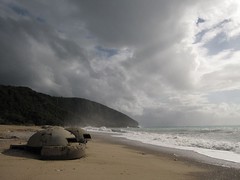
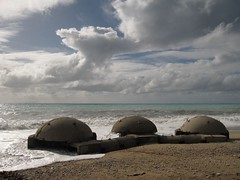
“One of the most talked about features of the Albanian landscape is the omnipresence of concrete bunkers: 700.000 in likely and unlikely locations throughout Albania” (Susan, 1998, p28).
http://www.flickr.com
The bunkers were a classic highlight for tourists coming to Albania and it was something unique. These bunkers made of concrete were built by the former dictator Enver Hoxha as defensive measures against possible invaders coming at the Albanian coast.
...and it gives you the impression of a defensive wall of bunkers, which was also the reason of building them. 
There are many ways these constructions have influence in landscape. 
First of all many of them lie in the beach and with the passing of years they have started to sink in the soft sand, they are subject of gathering rubbish and other types of waste. So in a way they destroy the beach and make it a dirtier place. It is true though that in some places along the Albanian coast, some big bunkers have been turned in coffee bars.
These were a few points on how politics has influenced in the changes of landscape in the last 20 years. 

I want to mention now some social or cultural reasons which in my opinion are to some extent connected to the by political ones. 
Even though they are committed by people of the area, they are somehow initiated by the changes in the political system. Among all others I want to emphasize something which I have witnessed myself, a change of landscape or better a ruin of the landscape. This, in my opinion, is the cause of political and social influences together. 
In the next photos you will see to what I am referring. 

This is a picture taken from the boat on 2003 and it shows the bay which I am talking about. The bay which I am talking about has always been a nice small bay where people could go and relax. 
It is the same place shown in the previous picture but different. 
As you can see the rocks have slide down ruining the small nice beach and the small caves do not exist anymore. Many people don’t know that landscape is a natural system very important for life on earth and important for people as well. 
By not knowing this they act without thinking that they are actually damaging the landscape and environment around them. 
The change between the two photos or better saying the destruction of the small bay is caused first by human action and second by governmental non action. 
In the process of building new cabins and other types of building in that area, in the last 10-15 years people have been collecting sand and gravel from the beach. They were obviously doing it in small faraway places like the small bay in the photo. 
After taking a considerable amount of sand and gravel the salted sea does the rest during the winter when the tide is higher and therefore the bay almost disappeared and the rocks fell on the beach. 
To many people it is not relevant and important what happens in the small bay and they don’t understand how landscape is connected with their life in that area. 
If they continue to make use of the landscape in order to increase their profits they will soon see their profits decreasing. In certain areas like the one we are talking about,tourists and visitors are attracted solely by the beauty of the landscape and environment. If with the passing of time natives will continue to destroy their landscape soon there will be no tourists to support their businesses. 
It is said that landscape reflects the culture of the people living in that area and it was like that before the last 20 years for this landscape. 
It was wild, untouched, and beautiful but this changed in the last 20 years. More and more people came in that region and in that village and they started to change their surroundings according to their needs. This happened to the stream coming from the mountain, going through the forest and finishing in the sea. 
I remember when I was there about 12 years ago that the stream was full of water and you could hear the water gurgle in the middle of the forest. It was also a good thing for the vegetation around and a very beautiful part of nature. 
Today if you follow the stream through the forest you will barely find some water flowing in it. People blocked the stream further up in the mountain so they could take the water for their purposes like building, for water resources and using it in different new buildings as everyday water. 
This is of course a human cause to the environment and to the beauty of landscape. It is something illegal to use the water of the stream for business purposes but this is still continuing nowadays and seems like it is not only a social fault, but also a governmental fault. 
The natural and physical attributes of the landscape have been changed directly and indirectly. This way it is easy to project this landscape in the future but looking that the reasons that cause this change are of different nature, political, social and cultural, the future is even more uncertain. 
I can say from my experience and from knowing the political and social situation in my country that this landscape has already entered the future. It is true that for the moment the situation on that area is not good, and many parts are covered with rubbish or are not cleaned by the natives themselves, but I have been thinking of a number of reasons why this situation will change. 


(TO BE CONTINUED...)
Firstly I believe that the new environmental reforms that our state is undertaking regarding the integration process will help in improving the situation of different landscapes and natural reserves in Albania....

Mar 30, 2012

A landscape to remember - Hans Bruzja (Part 1)


Know your place: landscape interpretation for outdoor practitioners 
Dhermi, a landscape to remember!

Albania is a country situated in the south-eastern part of Europe. Although being a small country, it has in it all kinds of landscape. 
Starting from the north, we have the Alps where there is snow all year round, many lakes in the mountains, waterfalls and some appropriate terrain for skiing slopes. Moving in the central part, we can find valleys, hills and mountains up to 1500 meters. While in the southern part there is a combination of high mountains over 1500 meters, rivers, valleys, forests and a beautiful beach. 
It is the southern part on which I want to focus in my landscape interpretation. 
That is actually my favorite part of Albania and I have been visiting that area since I was very young. Therefore I have seen it changing in time. 
Changes have been different, in physical appearance and also in terms of services provided to natives of that area and to tourists. The change of services has also influenced on landscape. 
The main reason why there is a radical change today compared to 20 years ago, is the change of the political system.
It was not until 1991 that the communist system collapsed and Albania embraced democratic governance. There are many differences between the two systems and these differences are consecutively reflected in the change of landscape. Other than that, there are many other cultural, social and geological reasons about the changes on that landscape. 
My intention is to share these changes and the reasons which brought to them in my landscape interpretation project. I have conducted a small activity when I was in Albania regarding the topic. Later on the paper I will further explain it. 
As I said the southern part is of my interest and I will focus my research in a place or village called Dhermi.
Down this village is a beautiful long beach with a forest next to it. In the last 20 years the shape and content of the landscape has changed in a visible way. I want to start speaking first from a historical perspective and for the climate in that area. Historically speaking, before 1991, meaning during communism, the area has been very little frequented by people because of the system at that time, for which I will speak later in the political perspective. 
Therefore there was not much human activity influencing on the forest, the beach and the terrain. Also according even to natives of that area, 40-50 years ago, the climate was much wilder and this wild climate  
with strong winds, rains and with a higher tide of the sea has made most of the rock spots round and not sharp as they were before. There are also big parts of rocks falling in the sea because of the water activity on them for hundreds of years. 
These can be considered natural changes on landscape and they happen over long periods of time. More important are changes which are not natural and which happen in short periods of time.

In the picture is shown a part of the landscape I am talking about and you can see the trees are not that dense in that area. As we know, nature or landscape is touched mostly by cultural, social and political issues. 
Looking the subject, which is Albania I would like to start from the political part. 
As I mentioned before, till 1991 Albania was under communism and different rules were applied in the society. One of them was about the maintenance of the natural habitats and natural landscapes. So the forest that you see in the picture above was very dense and had all sorts of tree fruits until 1997. During communism there was a scheduled caretaking for the forest, there were water canals to water the whole place and no one was allowed to take fruits or to go in the forest without any reason. 
These rules were valid till the beginning of 90’ till the communist traces disappeared completely. So in this case we have a political influence in protecting and maintaining the environment and landscape. 
I remember all the rules and measures because I have been visiting that place after the collapse of communism. 
It is really strange though how can politics and law influence in landscape. 
The difference in political system is very visible considering the fact that after 1991 in Albania people started having more freedom and their actions were not limited anymore. So areas which were frequented only by certain people could not be visited by everyone. This new trend, if I can called it like this, incited new investments in these areas looking that the number of visitors was increasing. This is the case for the area I am talking about. 
The free market and the right to open any kind of business was the new democratic trend in Albanian society and especially in the last 10 years, construction companies have been growing in number. The touristic promotion of the southern part of Albania and the high number of tourists made so that many new building started to be built in that area. 
The landscape then was subject to change. 
The next photos to show a small camping area with small cabins for tourists. 

It is visible the space created by cutting down trees and bushes in order to create some place for tents and cabins. 
Except the indirect political influence in this activity, it can also be the social influence. 
It is a handmade change from people of the area and still this comes from the political approach. 
In 1991, the new government decided to give a piece of land from the areas shown in the photo, to all the members of the former communist farms. This area has always been a property of the state and that is why it was so well maintained and it was like the highlight of the whole region there. 
By having a piece of land, native villagers decided to destroy the forest in order to build, camping sites, cabins and other buildings, to fulfill the tourism requirements and to increase their income. 
In fact it is totally normal to build a private hotel or private cabins but the fault of the state is that during this process, the government did not play a regulatory role, it did not put rules on where and how to build in order to protect the forest, the terrain and landscape.......


(TO BE CONTINUED...)
Another political aspect that has influenced in this landscape comes from communism times.....


Mar 25, 2012

Film Classics | Albanian Cinematography

Duke ju uruar shikim te kendshem 
me lejoni t'ju drejtoj disa pyetje:
Sipas jush ka ndryshuar VERTETE "kapedani"?
Ekzistojne akoma ne Shqiperi mendime/veprime te tilla ne drejtim te gruas?
Mendoni se gruaja shqiptare eshte e emancipuar si brenda dhe jashte mureve te shtepise?

Film shqiptar: 
KAPEDANI


**Creative Sunday Series  

Mar 14, 2012

Open Invitation | Leadership Development Programme 2012-13


NEW CALL FOR APPLICATIONS 

Leadership Development Programme 2012-2013    


Application deadline: 24 April 2012


In an effort to support the integration process in Southeast Europe, the TRANSFUSE Association, the College of Europe and the European Fund for the Balkans are organising the 7th Leadership Development Programme for young people from Southeast Europe, as well as broader Europe, who aspire to play an active role in the future of their countries.

Main features of the Programme

The programme will last one year and include:
- A two-week Summer Academy in Austria and Slovakia, September 2012: the curriculum will include topics related to the European Union and the development of its relations with Southeast Europe as well as wider issues of international and economic relations and practical skills development through workshops and simulation games.
- Group Projects in Southeast Europe, where the participants will work together in small multicultural groups to implement a joint activity in their countries.
- A five-day Spring Seminar in Belgium (Brussels/Bruges) in April 2013 with visits to the EU institutions and NATO, and classes in the College of Europe.
- The participants are expected to be available during the overall period of the Programme (from July 2012 to April 2013) and to attend each planned activity.
- The cost of the participation in the Programme for the successful candidates will be covered by the Programme. This will include travel costs, full board and lodging, visa fees and health insurance where required.

Participants

Up to 30 participants will be chosen to participate in the programme. They will come from Albania, Bosnia and Herzegovina, Bulgaria, Croatia, FYROM, Greece, Kosovo, Montenegro, Romania, Serbia and Turkey. In addition, a limited number of participants will be selected from other EU countries.
The Programme is specifically designed for students who are currently pursuing or are about to begin their postgraduate studies as well as recent graduates at the start of their professional career.

Applicants should:
  • be under the age of 26;
  • with a very good command of English and a successful academic record;
  • have a strong interest in Southeast Europe as well as in the EU and international affairs;
  • possess a high degree of personal commitment and professional orientation;
  • have had some initial work experience through internships or voluntary work;
  • fully attend the three compulsory parts of the Programme.

Apply now !!


Mar 13, 2012

Nga Borina Voko per Sofia Hilentzaris - GUEST WRITER 2

Nga Borina Voko interviste me Sofia Hilentzaris - GUEST WRITER

With the stars of the night sky

I write you name
so the whole world can see it
and your vision will shine

Peace, tomorrow morning
I ask you to rise,
rise so the guns and the weapons
you can melt, and love may prevail

Peace, tomorrow morning
I ask you to do your magic,
turn the guns and the weapons into
embraces and food for all your children

Dr. Hilentzaris, before we go on discussing your poetry tell me a little about your self.
I was born in Greece and left for the USA to be educated there at the age of thirteen. So, I went to high school and also completed my undergraduate and graduate school in Chicago. While working for La Rabida Chidlren’s Hospital - University of Chicago partner, I taught in the field of business at the raduate and undergraduate level in different colleges and universities because I liked to share my professional experiences with students and bring them closer to actual organizational life. In 2002 I decided to edicate all my time to education and therefore I also started to use online technologies and methodologies in teaching as well as train other professors on how to use these tools.
In 2003 we decided with my family to move to Greece and I have being here since then even though I do a lot of international traveling due to my job and interests. I have served at the American College of Greece and the American College of Thessaloniki. I also worked for the Skai Media group in Greece as an executive consultant for a few years. Currently I am Vice-Chancellor at the University of Indianapolis, Athens.

What are your current responsibilities at the university?
My current responsibilities include the oversight of the Office of Student Affairs, Financial Aid, Recruitment and Admissions-Undergraduate and Graduate Offices, and Study Abroad and Exchange Programs. As the Vice Chancellor, I am also responsible for promoting the mission of the university and ensuring that the students who wish to study in Greece as degree-seeking students or study abroad students receive top quality American higher education. The mission of the university is to prepare its students for effective, responsible, and articulate membership in the complex societies in which they
live and serve, and for excellence and leadership in their personal and professional lives. 
As the Vice Chancellor, I am also responsible for the oversight of Study Abroad and Exchange Programs such as “The Odyssey in Athens” study abroad program. This program has a unique curriculum since it offers a diverse variety of accredited upper- level courses. 

Do you any have children?
I do have children. My son graduated this year from Northwestern University in Chicago as a mechanical engineer and is now a graduate student in the mechanical engineering department at the University of California at Santa Barbara. My daughter just turned 17 and her goal is to get into a top university in the USA, so she will be a freshman in college next year. My son loves soccer and my daughter loves dancing. 

How do you like working in Europe, is it different than the USA?
I like change. Europe is different than the US in various ways. Language, culture, history, traditions, landscape, climate, - all are different. But I like variety and I love to meet different people and from different cultures so Europe and Greece are an ideal setting for that.
In the US of course there is a lot of diversity too but it is different. Of course within Europe and the USA there are different cultures and peoples so it is fun in either place, we learn a lot by coming into contact with others, and that is what I appreciate also as the Vice Chancellor, I get to meet students and professors from all over the world, it is really exciting job.

So, where does poetry fit into all this?
Well, first of all I am a business manager by profession. 
I have accumulated more then 25 years in the for-profit and non-profit business world internationally including in education and healthcare. But I am also blessed with a creative soul which is sensitive to others’ dreams, loves, and longings to find the purpose of their life, or purposes in the lives. And that is where poetry comes in. I can listen to someone’s story and the next thing I know I am writing poetry.  Most of my inspiration though comes when I am by the sea.
I love the sea, its colors, its sounds, they way it smells, the way it tastes. I love to breath the air that comes to my lungs after the waves crash on rugged rocks. I love everything about the sea and I admire her power. She is ever changing, beautiful, powerful and a “trismegistus” creator herself. Trismegistus
freely translated in Greek means “three- times Great” or “three-times Powerful.” A few years back I read my teenage diary which I had not read for a long time.
In the pages I discovered that I had written that I love to write poetry and listen to music.
So, sooner or later we all meet our destiny I guess. Personally, I was writing poetry on and off without
paying any attention to the creative side of myself almost all my life and of course I had forgotten my teenage diary writings. Then in one week a few years back I wrote about 120 poems. Since then I can write with a little trigger of inspiration.
I am also a great lover of books, I cannot stay away from good books. If I like a book I can read it in a
day, it is like food for my soul, I cannot wait to see what the author will write next on the page. I also like to read a variety of books in history, biology, sociology, philosophy. I do not discriminate, except that I would probably not read a statistics book for leisure. And of course my mother is an unknown poet - but I know her well- so maybe there is a genetic predisposition that surfaces when the environment is fertile.

Who is your favorite writer / Poet?

There are so many great writers and poets past and present but my favorite contemporary writer is Gabriel García Márquez and my favorite contemporary poet is Odysseas Elytis.
I also adore the Ancient myths and folklore stories. And of course I cannot leave out historians and philosophers. From the past, I am particularly intrigued and inspired by Homer, Socrates, Aristophanes, Epictetus, Herodotus and Marcus Aurelius.
The bottom line is I don’t know who to live out. There are so many great past and present great people that it is hard for one to choose. But I am equally intrigued and inspired by artists such as Raphael and Michelangelo and scientists like Einstein and Stephen Hawking. I am especially indebted to Raphael because he did not forget Ypatia in his School of Athens painting.
Women in the past have not received the attention they deserved, but Raphael did not forget to pay tribute to Ypatia in his beautiful painting. Who can I live out? Our world is so rich with great talent, I just wish we humans would find a way to all live peacefully, then we would be more creative as a species.

What language do you usually write poetry in? Dream in?

You know, this is really an interesting question. 
I usually write poetry in Greek even though most of my professional life correspondence, articles and books are in English and I dream in English.
The book I am currently writing on Leadership and Creativity is in English; but sometimes I write poetry in English and dream in Greek, and I know for certain that I dream in colors. I am surprised to hear from some people that they dream in black and white. Maybe this is a good research question for a scientist to explore.
Why some people dream in color and some in black and white? 
If I had the means I would scientifically explore this question. The poems in this interview were written in
Greek and I translated them in English, I hope they make sense in English to others, to me they do since I wrote them, so we are putting them to the test with your interview and publication. I wish that someday I can write in another language, maybe Spanish or Italian. I have collaborated with the Albanian Writers Abroad society and published several poems along with Albanian writers and poets and others from around the globe but it was in Greek.
The publication includes Albanian, Greek and English, so it is multi-language.

What do you think about the future of the world? 
The future of writing?
Humans are co-creators in their future, we kind of write our own stories, we have a lot to do with building our trajectories in life. Yes, there is a lot of people born into unfortunate situations in this world but in a global world we are having more and more choices. You can be poor and happy or you can be rich and delusional. The technology we have developed can assist us to feed everybody or kill everybody.
That is a choice.
Think of the status of women 100 years back or other minorities in the different parts of the world, how much choice did they have back then? The question is how do we all progress together little by little every day. And of course there are set-backs but there is no good reason to give up on Love, Peace and Happiness for all and forget what Thomas Jefferson, Ypatia, Fromm and so many others have taught us. I think the future of the world depends on writers and poets. Writers and poets have the ability to inspire others towards Excellence and towards Greatness of the human spirit- the scientist in the lab, the teacher in the classroom, the doctor in the hospital, the business leader, the world leaders, all need inspiration towards Excellence and Greatness of the human spirit.
Writers and poets have been blessed with the talent and the creative soul to lead others towards human perfection. Socrates, the great philosopher, stated that goodness is knowledge, it is an arête, knowledge transfer is possible through communication- writing and poetry are the greatest tools of communication. Writers and poets need to inspire others though not make them feel bad.
I don’t like to read or write gloomy, end-of the world kind of stories or poetry. I am inspired by the great things in nature and in the human soul and this is what I like to share with others though my poetry, and try to convince them that Peace is our opportunity to be all be Great, “three-times Great”, “three-times Powerfull” like Trismegistus.

*GUEST WRITER*

Mar 12, 2012

Architecture in the Balkans

At a time where economic powers have shifted, the architecture field - deeply affected, stands in shaky grounds. Many architects are questioning their role, their motives, and their actions. The core belief that everything they do is for people, for the greater good, has been replaced with a fear of serving the egos and fetishes of wealthy and powerful clients. The value of producing for the public, the personal and professional pride in doing so, has gone. 

What made me go into architecture? Why i became an architect? and many other questions about the identity and the status of an architect have arisen lately, and most of us are struggling for clear answers. I say this because in many talks, articles, conferences, and what have you, the above issues have come up and confronting them has been an awkward ah-ha moment. It is just an observation in my part, a rhetorical one at that. I am the least qualified architect (wanna to-be) to give an answer, but it looks like there's a growing shift towards public space services (urban or not), an inevitable one of course, a more informal move through citizen participation. 

Being in Tirana, Albania studying the urban city and the architecture of publics, puts everything into perspective. This may just be the right time and place to re-engage the social, political and economic realities through conscious design, and apply a spatial logic that connects, scales, and delivers architecture back to the people, to the common everyday life. Of course, here it needs to be developed informally through social participation, by experimentation, interventions and why not occupation. 

As one of the many post-totalitarian Balkan countries, Albania has replaced the socialist system with a capitalist one for more than two decades. It has been a schizophrenic series of privatizations, extensive (mostly illegal) building activity, and close to none responsibility and regulations. 

Maybe by looking at the Balkans and their struggle to have a basic infrastructural need for water, electricity, and roads - we would understand the public spatiality of everyday life and the importance of architecture in providing a lot more. More means a range of other activities, behaviors, and attitudes toward oneself, the community, and us (the architects). In this way, less money would disappear in the cracks and more would reach people.

It will definitely give us a (somewhat) better understanding of space. How it is designed, built and used. Who owns it and who can access it? And, i don't mean only visible public space, but the irreplaceble systems that make life possible in the city.

Following this conversation, here's an excerpt of these conditions in Prishtina, Kosovo:
(to read the full article please go here) 
Phase 1: Communicate — What would I do to make things right, what would I do about the architecture in Prishtina? First of all, I am only a man. I’m sure some of you might find it hard to believe, or maybe even blasphemous to suggest “playing god,” but desperate times call for desperate measures. The exercise of removing all boundaries and limitations from what is expected or perceived as acceptable means anything is possible; not only in terms of architecture but also in terms of society and culture. This is a good start. Open up your minds and draw pictures of your thoughts. What do you want for yourself but more importantly what do you want for your people and your future? This is the first step to becoming an architect. Be proud that it’s OK to draw and share your pictures with the world.. [...]

**********************************************************

Mar 10, 2012

Nga Borina Voko per Sofia Hilentzaris - GUEST WRITER


THE SPRING OF WISDOM

Sun-kissed,
forgotten in the narrow paths of the world,
Warm early spring

Sun-burned,
in the Aegean roads
Your shores an embroidery of stress

Blessed by Zeus,
inspired by his desires
Sugary land

Loved,
fulfilled by the caressing of the peoples’ hands
Golden sand

Open the channel flow of
The Socratic Spring
for the Dove of Peace to drink

TRISMEGISTUS

I have something
that you want,
it flows in my veins
I have some secrets
that you want,

come to be loved
like it is the first time,
come so we can meet
in far-off sunsets,

You will be the Great,
the Great chief,
controlling the river of my life,
all-powerful you will be

You will be the Great,
the Great chief,
to open and close my life’s channel,
all-powerful you will be


HAPPY BIRTHDAY BORINA*